
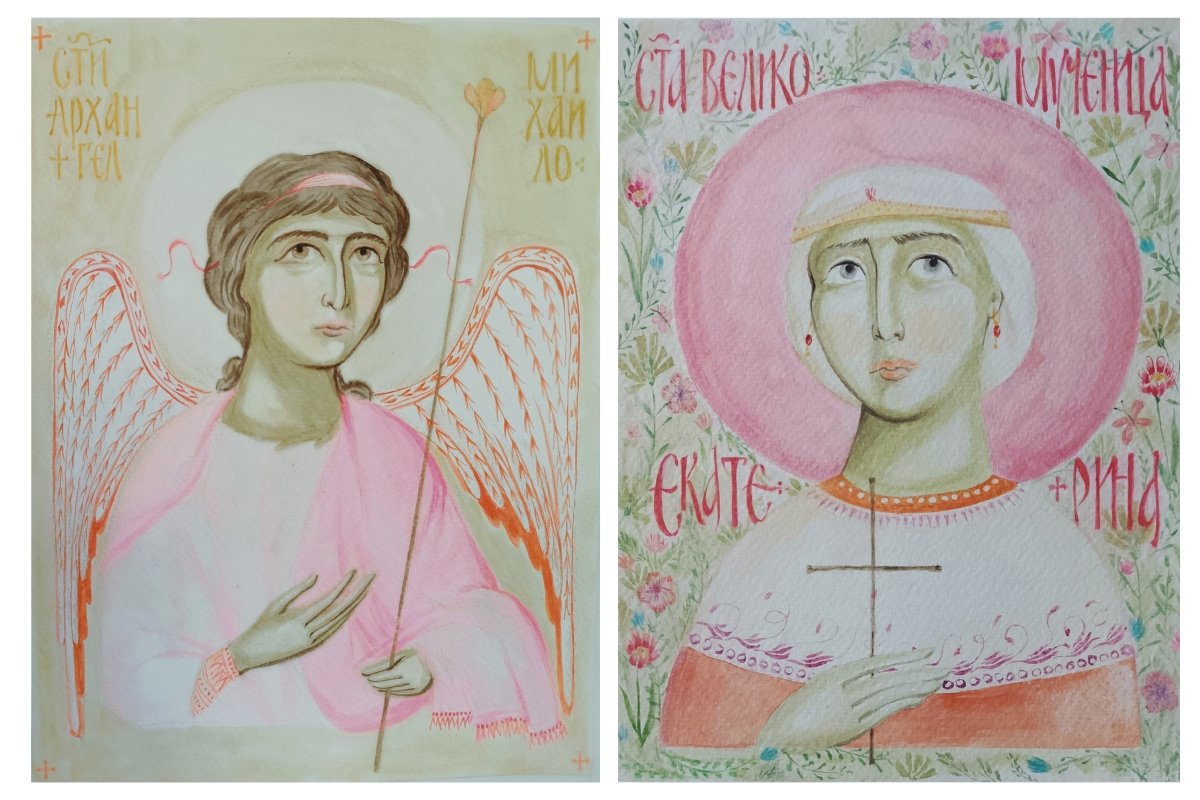
By: Gordana Tadić / Photo: Todor Mitrović
Sacred art in Serbia has for decades been perceived as a field of silence, conservation and the repetition of old patterns. Yet a closer look at the contemporary church art scene reveals an entirely different picture: Serbia has today become a dynamic centre of the fresco-painting world, a place where centuries-old techniques intertwine with modern sensibility, and where canon serves as a foundation rather than a boundary of expression.
The journey from monastic workshops to contemporary academies, and on to UNESCO patronage, has been long, complex and decisive for our understanding of cultural identity.
Foundations in the Middle Ages
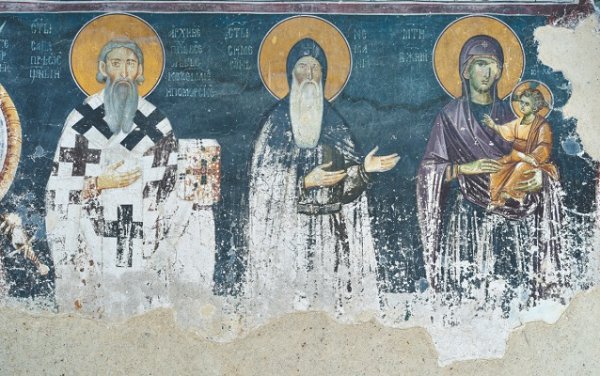
To understand the contemporary fresco and icon, one must return to the Middle Ages, to the time when monasteries such as Studenica, Sopoćani, Dečani and Žiča became the epicentres of Byzantine-Serbian art.
The Byzantine canon was not merely a style but a theological system of the image. The icon did not represent an illustration but a "window into the heavenly" — a visual theology rendered in colour and light. During the Raška and Morava Schools, a powerful local expression developed that united the monumentality of fresco painting with subtle iconographic narration.
This continuity was broken and renewed over the centuries, yet the idea of canon, as a spiritual and aesthetic framework, remained a constant.
From Ideological Silence to Revival
The development of church art after the Second World War was marked by ideological pressure and institutional marginalisation. In socialist Yugoslavia, church art did not enjoy the public space it had held in earlier eras. Work took place largely within ecclesiastical circles, without systemic support.
At the same time, a strong school of art history was developing at the Faculty of Philosophy of the University of Belgrade, preserving scholarly continuity through Byzantine studies and the examination of medieval heritage.
A genuine revival in practice did not begin until the late 1980s and through the 1990s, in parallel with broader social and spiritual changes.
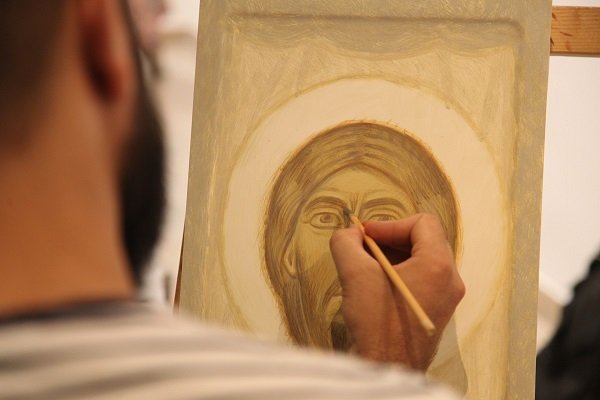
As Dr Todor Mitrović, Dean of the SPC Academy of Arts and Conservation, notes, everything in the beginning was based on copying medieval models: "There was nowhere to learn from. Interest began first with national themes, then with the Church and faith, and over time, step by step, it was raised to a higher level."
In that period, icon painting was above all an act of identity restoration. It soon became clear, however, that mechanically copying the Middle Ages could not serve as a long-term model of development.
Where Is the "Window into the Heavenly" Taught Today?
Sacred art in Serbia is no longer taught exclusively through the traditional master-apprentice relationship but through a system of higher education.
The central institution is the SPC Academy of Arts and Conservation, which has elevated icon painting, fresco painting and conservation to the level of accredited study programmes. Students here do not master only the technology of pigments, gilding or wall painting, but also the deep theological grounding without which an icon remains mere decoration.
The Orthodox Faculty of Theology of the University of Belgrade, through liturgics and church art, provides the theoretical framework for understanding the image within the context of worship.
State art institutions also play a significant role. The Faculty of Applied Arts in Belgrade trains artists capable of bringing monumental wall surfaces to life through fresco or mosaic. At the Faculty of Fine Arts in Belgrade, painting students frequently address sacred themes in their undergraduate and master theses, introducing a contemporary visual language into the tradition.
It is precisely this combination of ecclesiastical and state education that has produced the impressive number of artists who are today transforming the interiors of our churches.
Faster Than the Middle Ages
One of the most thought-provoking arguments put forward by Dr Mitrović concerns the influence of contemporary media. In the Middle Ages, styles changed diachronically, across generations. An artist had to travel for days to see another's work. Today, every school, era and technique is available on screen.
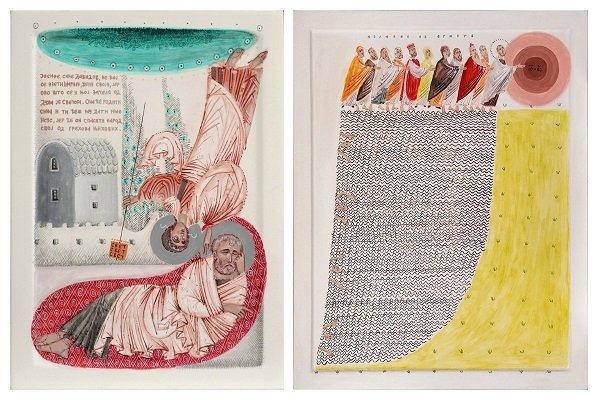
This "new media situation" has led to an accelerated stylistic dynamic. At church art exhibitions one can now encounter strict Byzantine form and ascetically reduced colouring alongside works whose narrative quality is reminiscent of graphic novels. Late Byzantine wall painting, with scenes arranged in rectangular fields, can indeed be regarded as a kind of forerunner of contemporary sequential art.
For the new generation of artists, canon is no longer a limitation but a structure within which an individual artistic voice develops.
Written Heritage: How Sacred Art Is Documented and Transmitted
The journal Zograf, published by the Faculty of Philosophy in Belgrade, has become one of the key international references for the study of Eastern Christian art.
This tradition of scholarly engagement with the field has been joined by Živopis, a peer-reviewed annual journal of the SPC Academy, published since 2007, which follows contemporary research at the intersection of church art and conservation. An important part of the scene is also the publishing activity of the Academy itself: manuals and teaching literature for icon painting and conservation that are gradually building a reference library of contemporary sacred art.
A significant role in shaping the broader context is also played by the extensive publishing activity of the Serbian Orthodox Church: the Synod, eparchies and monasteries continually publish monographs devoted to frescoes, iconostases and the artistic heritage of churches.
The wider spiritual and philosophical framework is nurtured by the publishing house Biblos, specialised in theology and spiritual literature.
The Exhibition Scene: A Living Map of Contemporary Icon Painting
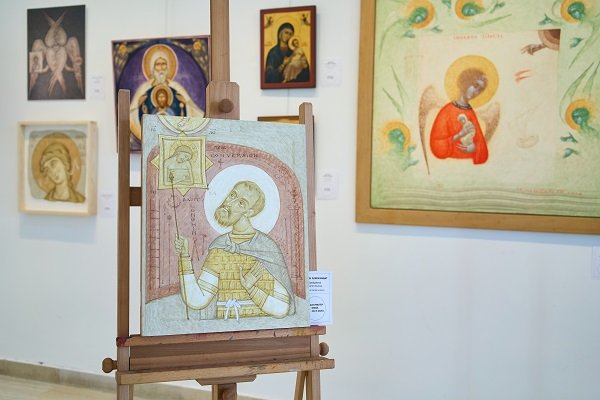
One of the most telling indicators of the vital energy of Serbian sacred art is its increasingly broad exhibition scene. In recent years, a range of regular and thematic events has taken shape, each offering, in its own way, a cross-section of the current state of icon and fresco painting.
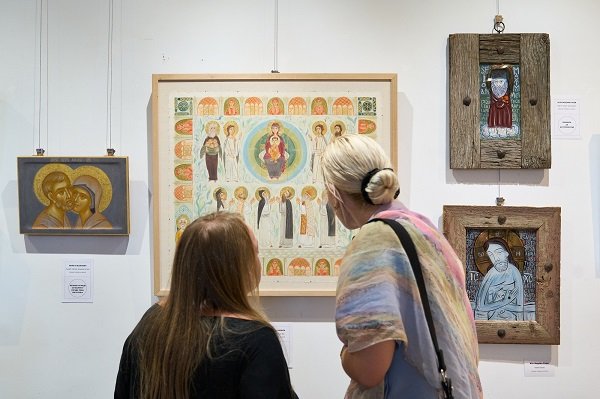
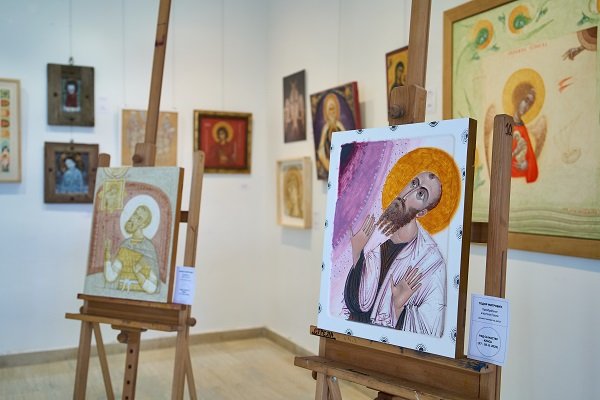
The Cultural Centre Kaleidoskop has since 2020 organised the juried group exhibition "Portrait on an Icon", which has become one of the central gathering points for icon painters from Serbia and the region. The fifth edition, held in 2024, marked an international step forward, with the participation of artists from Romania and the organisation of master-class workshops with professors from the Bucharest Academy.
From 2025 the exhibition took on a multidisciplinary character and, under the title "The Light of the Logos", brought together artists from twelve countries at the Gallery of the Kolarac Foundation in Belgrade. The event received UNESCO patronage and was opened in the presence of Patriarch Porfirije.
Alongside the exhibition, live master classes were held with leading figures including Professor Todor Mitrović from Belgrade and Mihai Coman, Andrei Mușat and Grigore Popescu from Romania.
"During the exhibition, Belgrade was the centre of the fresco-painting world. The fact that UNESCO entered as patron gives the exhibition an international character in the fullest sense," says Mitrović.
The SPC Academy of Arts and Conservation has also been developing its own exhibition activity. The show "Missionaries Through Image" (Gallery Progres, 2023) presented works by Academy graduates, while at the end of 2024 the international exhibition "Holy Martyrs: Through the Eyes of Our Time" opened at the Residence of Princess Ljubica, dedicated to sacred art across all its media, from icon and fresco painting to mosaic, sculpture and ceramics. In December 2025, works by Academy professors and associates were shown in the hall of the Orthodox Faculty of Theology, on the occasion of the 1,700th anniversary of the First Ecumenical Council.
Outside the capital, the Cultural Centre of Šabac organises an annual juried exhibition of icons, one that cherishes the icon both as an object of prayer and as a gallery phenomenon, providing a reliable cross-section of icon painting at any given moment.
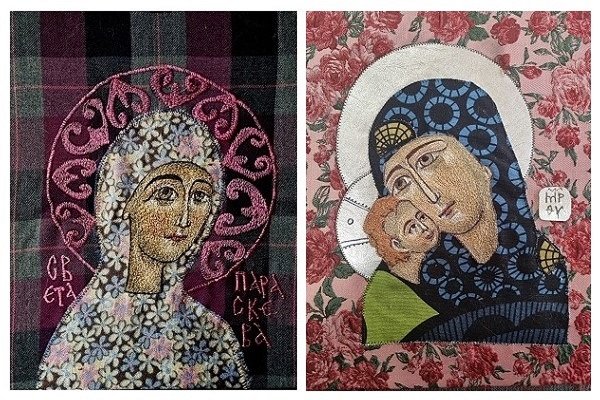
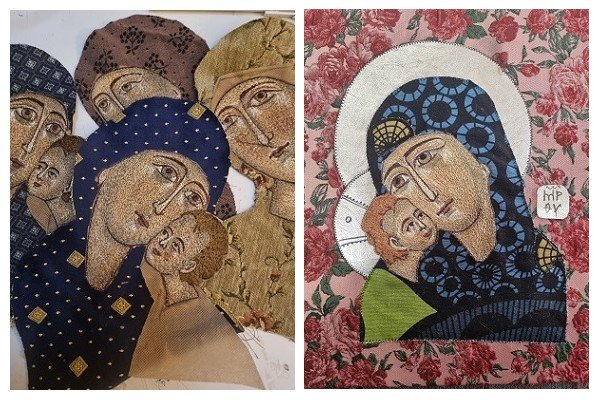
A unique place is held by the exhibition "The World in the Image, the Image of the World", an interdisciplinary project that brings together in one space the visual art of all traditional religious communities in Serbia: the Serbian Orthodox Church, the Roman Catholic Church, the Jewish Community and the Islamic Community. After a pilot edition at the National Library of Serbia in 2023, the exhibition was presented at the Historical Museum of Serbia in 2024/25, where 54 artists showed works created in techniques ranging from fresco and mosaic to filigree, calligraphy, illumination and textiles.
All of these events together draw a living map of contemporary sacred art-making and confirm that Serbian church art today is not merely a subject of museum preservation but a space of active creation and dialogue.
Between Canon and Freedom
Serbian sacred art today stands at a crossroads. On one side is the firm Byzantine canon; on the other, the contemporary artist's need for authentic expression. It is precisely in that tension that the most interesting work is being made.
The heart of sacred art today beats not only in monastic workshops but also in the studios of young painters, art academies, and domestic and international exhibition spaces.
The road from the silence of the post-war decades to today's explosion of creativity has been long. But it is precisely because of that journey that the contemporary Serbian fresco and icon now stand as living art, capable of speaking in the language of tradition and, at the same time, in the language of our own time.
This report is part of the project Serbian Culture in the Focus of UNESCO, through which the Kaleidoskop Cultural Center marks the 850th anniversary of the birth of Saint Sava and, at UNESCO’s invitation, joins the global celebration of the 20th anniversary of the Convention on Cultural Diversity.
The project is co-funded by the Ministry of Information and Telecommunications. The views expressed in this supported media project do not necessarily reflect those of the institution that provided the funding.
READ ALSO:
PALACE OF SERBIA: PRIMER OF CONTEMPORARY ART
RETROSPECTIVE: THE LIGHT OF THE LOGOS 2025
All content on the Kaleidoskop media magazine portal is free of charge, and the website is financed exclusively through donations from readers and friends.
Support the work of our magazine HERE












Komentari