
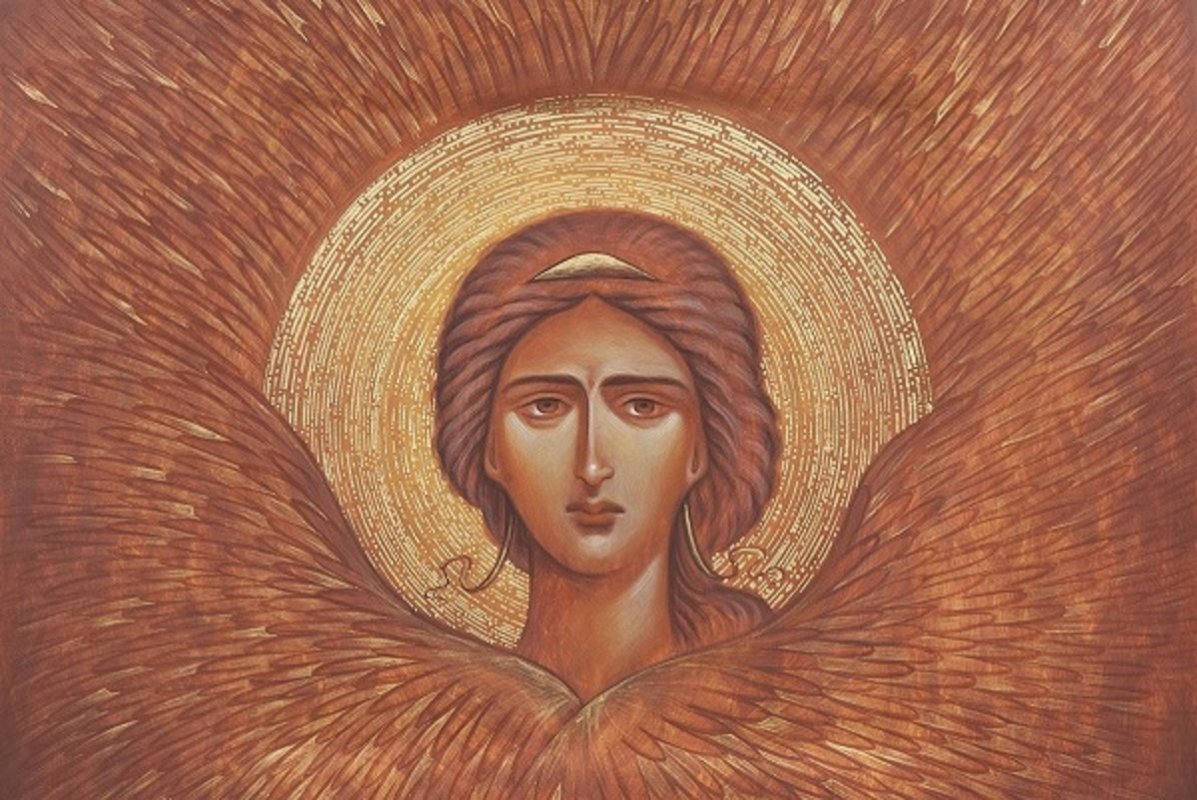
By Gordana Tadić / Cover photo by Anđelija Lepčević
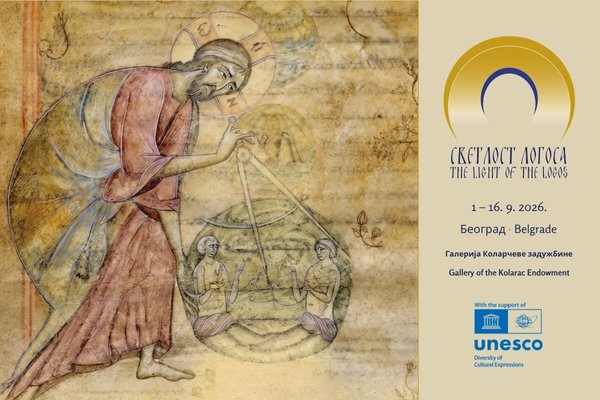
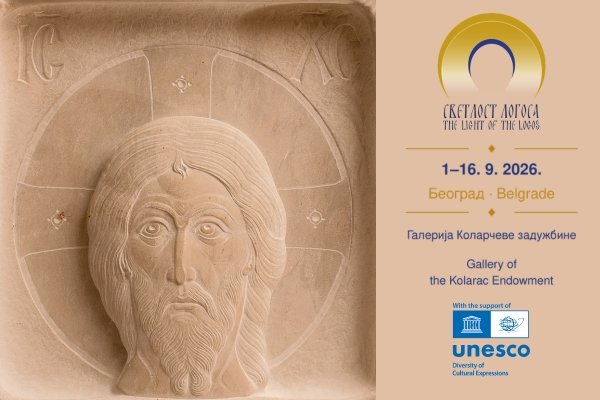
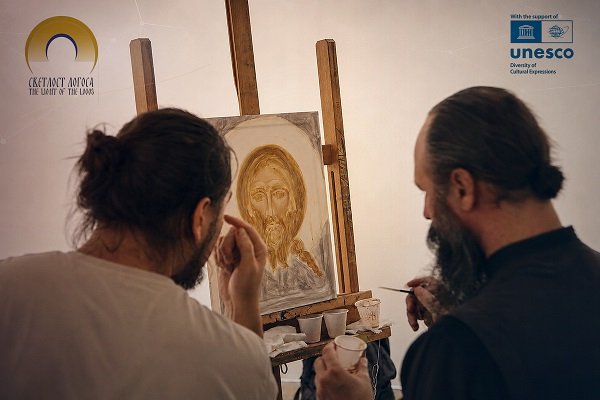
The 1990s brought a intense change to Serbian ecclesiastical painting. What had been for decades a modest, almost hidden practice of monastic workshops suddenly became one of the most dynamic areas of contemporary visual arts.
From the end of the last century to the present day, the Serbian icon has traveled a fascinating path, from distant, utilitarian copying of medieval models, through deep understanding and revival of the Byzantine pictorial language, to bold creative reinterpretations of tradition through dialogue with contemporary culture.
"The transformation was inevitable", explains Professor Dr. Todor Mitrović, Dean of the Academy of the Serbian Orthodox Church for Art and Conservation and author of the extensive study "The Art of Icon in Serbia from the 1990s to the Present: Tradition, Traditions, and Innovations" published in the Herald of the Ethnographic Institute of the Serbian Academy of Sciences and Arts.
"The artistic creative spirit could not be satisfied with mere knowledge of the language; it strove for its complete mastery and elevation to the poetic dimensions we call art".
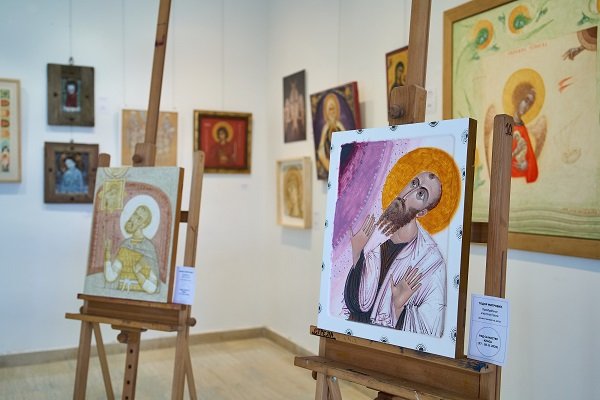
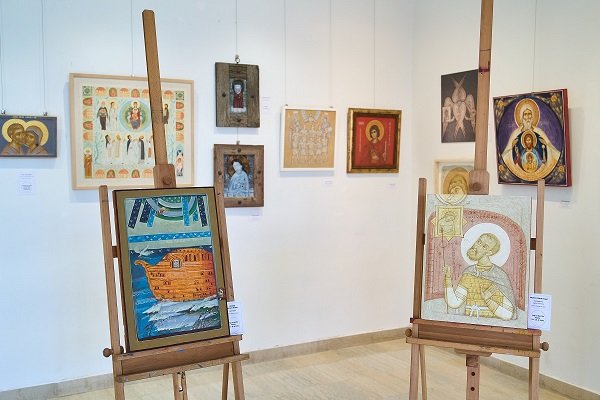
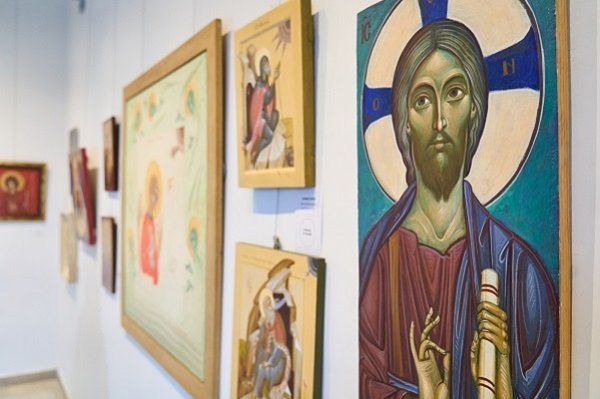
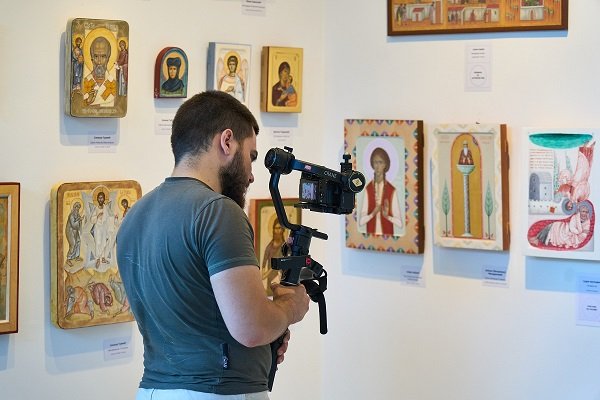
Today, the Serbian ecclesiastical painting scene includes dozens of talented authors whose works range from meticulous copying of Byzantine forms to experimental pieces that freely combine ancient traditions with the aesthetics of contemporary art.

By Todor Mitrović
The Nineties: Between Monastery and Manufacture
The breakup of Yugoslavia opened space for national and religious expression that had not existed for decades. The mass return to faith created an enormous increase in demand for icons—both in churches and in Christian homes. The problem was that the painting practices of the time could not meet such demand.
The solution, paradoxically, came from two opposite directions. On the one hand, painting "companies" emerged that produced icons almost in a manufacturing manner, each phase of the process was carried out by a different person according to a predefined template. The result was series of completely identical icons that, as Mitrović notes, gave an impression of impersonality: "The newly created icons were impersonal not only because they were identical to each other, but also because the production process was maximally simplified to increase production and lower costs".
Interestingly, the taste of patrons, formed primarily through contact with industrial design, actually preferred this kind of "perfect" smoothness. "If the surfaces and forms on the icon were polished and flawlessly processed like the forms of refrigerators, televisions, or automobiles, they were more 'aesthetically' desirable to the average patron", writes Mitrović, describing an unusual aesthetic connection between tradition and industrial culture.
On the other hand, individual artists such as Veronika Đukanović and Dragana Đorđević stood out, setting new quality standards with their dazzling precision in the painting process.
Tumane 1991: The Birth of Authenticity
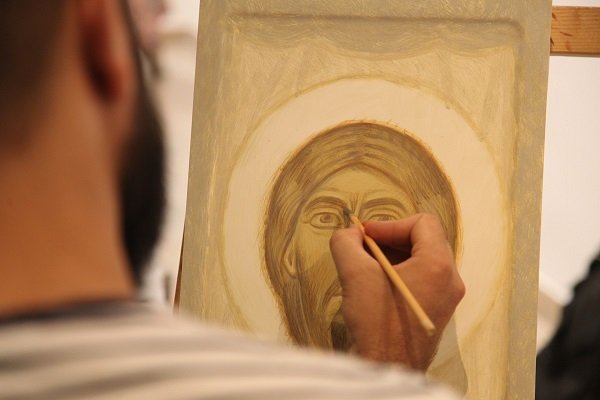
A key turning point occurred in 1991, when the painting of the katholikon of Tumane Monastery was completed. A trio of academically trained artists—Vladimir Bata Kidišević, Predrag Stojković (later Archimandrite Lazar), and Gavrilo Marković—created something fundamentally different from everything that had existed before.
"Instead of clumsily trying to imitate medieval patterns, these artists truly revived the language and spirit of medieval art", explains Mitrović. First, they revived the forgotten technique of painting on fresh plaster, and then they radically revised their approach to style - instead of the usual reliance on late Byzantine solutions from the 14th century, they turned to the older Byzantine art of the Komnenian era (12th century).
The newly created art, as Mitrović vividly puts it, went "behind the back" of the very idea of restoration, becoming "more original" and "more Byzantine" than concrete solutions from the history of Byzantine art.
Just two years later, in 1993, the Serbian Orthodox Church founded the Academy of the Serbian Orthodox Church for Arts and Conservation, the first art institution to operate independently of state patronage. This school would produce the largest number of key authors of contemporary Serbian ecclesiastical art.
Two Paths, One Tradition
During the first decade of the 21st century, two different but not opposing approaches crystallized: restorative and interpretative.
The restorative approach implies the deepest possible understanding and revival of the Byzantine pictorial language. Vladimir Karanović and Veronika Đukanović in wall painting, and Jelena Hinić in icon painting, achieved a level of virtuosity that finally bridges the gap between the contemporary and the medieval. "Before their works, you have the impression that you are standing before works that could have been painted by some late Byzantine master", notes Mitrović.
Goran Jović went a step further - creatively building upon the Byzantine style, he makes it more dynamic and at times more realistic, creating a kind of artistic "hypothesis" about how Byzantine art would have developed had there been no Turkish invasion.
The interpretative approach, on the other hand, revives tradition through open dialogue with contemporary visual culture. Mother Jefimija Topolski, abbess of Gradac Monastery, has been working since the 1990s on "white" icons executed in a pastel palette that does not belong to medieval models but to contemporary painting.
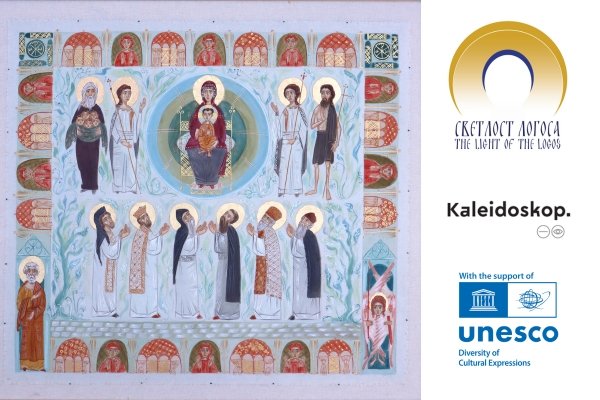
Around Mother Jefimija and the icon-painting workshop of Gradac Monastery, a very creative group of educated female painters gathered, such as Neda Kovinić, Jelena Miladinović, and Marija Vukosavljević, each of whom succeeded in their own way in deepening the dialogue between ecclesiastical art and contemporary visual culture.

By Marija Vukosavljević
Father Tihon Rakićević, long-time abbot of Studenica Monastery and now vicar bishop of Moravica, combines deep knowledge of the Byzantine language with vigorous gestural expression close to contemporary art.
Particularly fascinating is the story of monk Damaskin Radulović from Kovilj Monastery. Drawing on Russian icon-painting style, he recognized the geometric-abstract aspects of ancient art and began to emphasize them far beyond the measure that existed in medieval icon painting. The result is icons that simultaneously possess the qualities of ancient icon painting and modern art, sometimes even evoking non-representational geometric abstraction. It is characteristic that monk Damaskin never exhibited his works publicly, he painted "in creative dialogue with contemporary art solely out of personal conviction".
Contemporary Scene: Dispersion and Freedom
Members of different generations of authors who stand out during this period for particularly successful adoption and poetic deepening of the achievements of the restorative approach include Despina Crnčević [1975], Marko Pašić [1975], Ivana Pašić [1978], Siniša Trivić [1976], Milan Radusin [1982], Mara Đurović [1982], Đorđe Savić [1982], Suzana Parenta [1984], Katarina Perić [1985], Jelena Obradović Nedeljkov [1985], Dejan Nedeljkov [1986], Nikola Novaković [1987], Ljiljana Peranović [1992], Igor Pjanić [1992], Nemanja Lazarević [1993]...

By Siniša Trivić
The second decade of the 21st century is characterized by particularly pronounced stylistic diversity. Among the authors who have raised the restorative approach to a high level are Marko Pašić, Dejan Nedeljkov, and Đorđe Savić, whose works testify to meticulous knowledge of the Byzantine pictorial language and the ability to deepen it poetically.

By Đorđe i Jelena Savić
The younger generation - Nikola Sarić, Mijalko Đunisijević, Milica Mišić, Luka Novaković, Nemanja Kocić - develops their own signatures that freely combine different traditions.
Đunisijević engages in coloristic research, harmonizing a palette of intensely contemporary pigments into iconic spaces best described as "not of this world." Sarić, meanwhile, incorporates forms from ancient Egyptian, Assyrian, or Persian art, closing, as Mitrović observes, "the interpretative circle with a paradoxical restorative procedure" showing that the art of the icon "can embrace all possible visual worlds, from the oldest to the youngest" Novaković and Kocić, on the other hand, search for an authentic authorial signature and carefully measured dialogue with contemporary visual culture in gestural and formal dynamics, building their own stylistic solutions that transcend the purely restorative approach.

Milica Mišić
A special phenomenon is what Mitrović calls "feminine writing". Artists such as Radmila Nestorović and Bisenije Tereščenko introduce levels of refinement and elegance into the style of ecclesiastical art that did not exist before, indirectly re-examining medieval visual sensibility in relation to the patriarchal environment in which it was created.
In wall painting, Anastasije Radović and Vuk Dabetić open the boldest dialogue with contemporary art, organizing pictorial material in vibrant abstract rhythms that up close resemble a contemporary painting, only to be transformed at a distance into recognizable iconographic forms.
From Language to Poetics
"The picture of contemporary sacred art in Serbia today looks different from the stereotypes that often accompany it", concludes Professor Todor Mitrović. While both ecclesiastical and academic circles often believe that the art of the icon is recognizable by its uncompromising conservatism, reality shows something quite different.
"Step by step, a complex artistic scene has been formed, with a huge audience that places specific demands on the authors, but also with authors who have long been able to offer creative responses and gradually influence the taste of the audience, in the direction of a dynamic interaction that belongs to the spheres of authentic artistic creation".
In that sense, he adds, one can expect quite a few more "fresh, authentic, and expressive visual-poetic statements", perhaps even more than at the end of the last century.
The Serbian icon of the 21st century is not just a guardian of tradition. It is a living, diverse, and creative artistic practice that manages to reconcile the ancient and the contemporary, spirituality and aesthetics, tradition and innovation.
This report is part of the project Serbian Culture in the Focus of UNESCO, through which the Kaleidoskop Cultural Center marks the 850th anniversary of the birth of Saint Sava and, at UNESCO’s invitation, joins the global celebration of the 20th anniversary of the Convention on Cultural Diversity.
The project is co-funded by the Ministry of Information and Telecommunications. The views expressed in this supported media project do not necessarily reflect those of the institution that provided the funding.
READ ALSO:
PALACE OF SERBIA: PRIMER OF CONTEMPORARY ART
RETROSPECTIVE: THE LIGHT OF THE LOGOS 2025
All content on the Kaleidoskop media magazine portal is free of charge, and the website is financed exclusively through donations from readers and friends.
Support the work of our magazine HERE











Komentari