
Interview by Miona Kovačević / Photo: Marija Vukosavljević
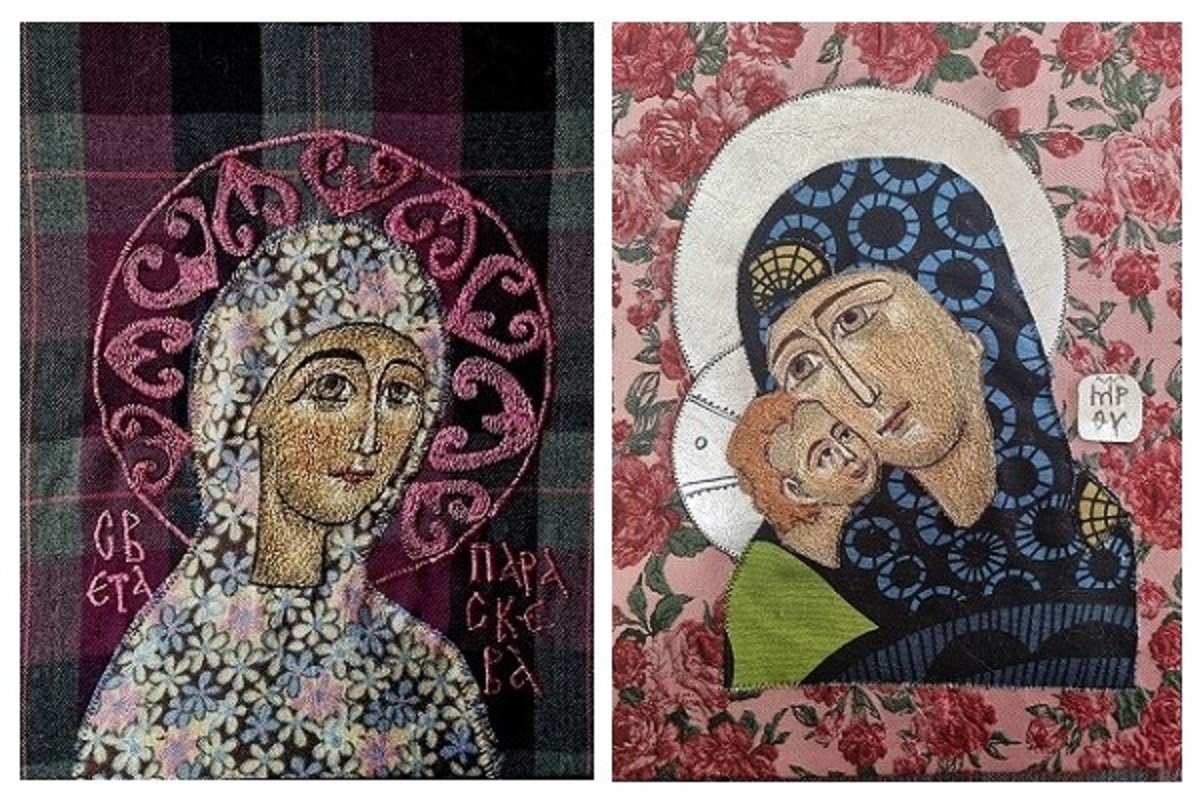
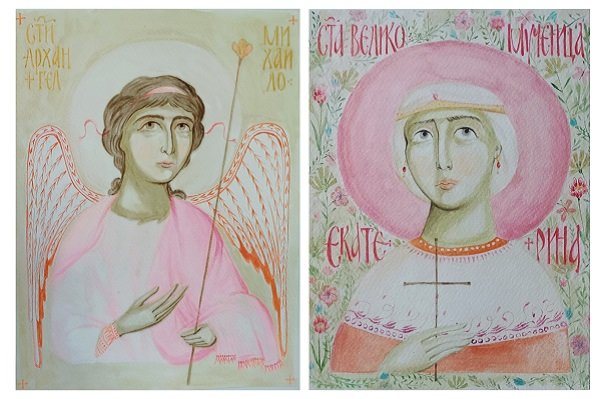
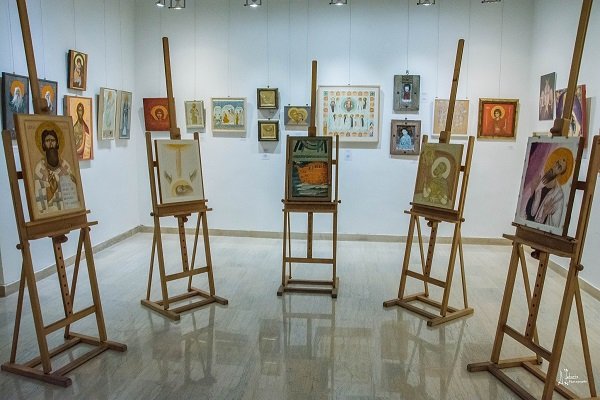
As part of the project “Serbian Culture in the UNESCO Focus,” which views contemporary sacred art as a space where heritage is not merely preserved through conservation but continually reshaped and articulated through a new visual language, we speak with Marija Vukosavljević - an artist who has taken traditional embroidery beyond the decorative sphere and placed it at the very center of iconographic expression.
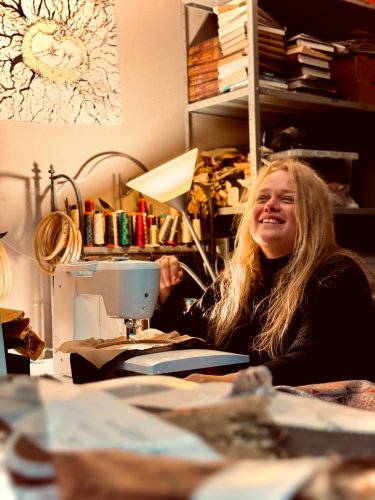
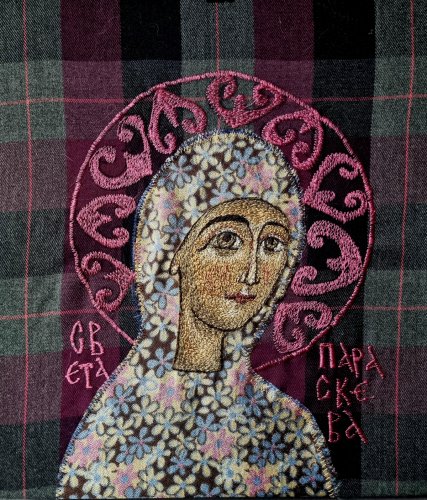
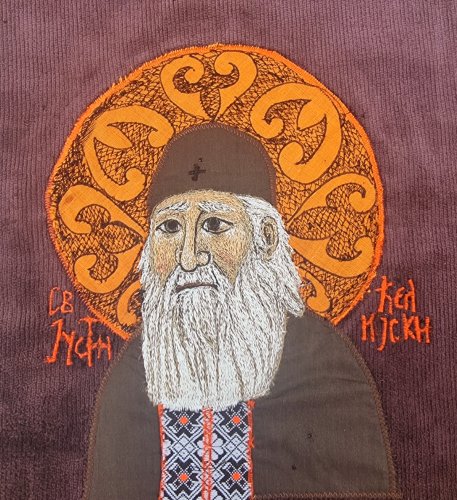
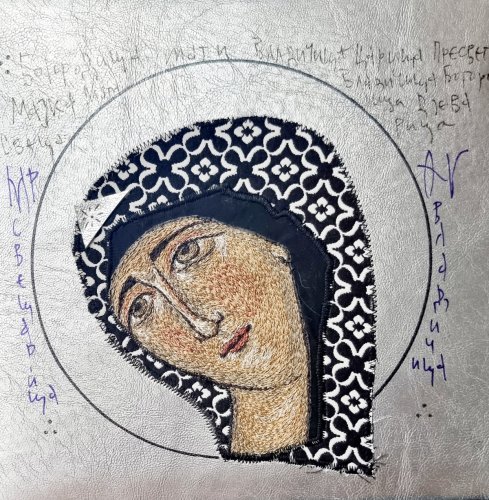
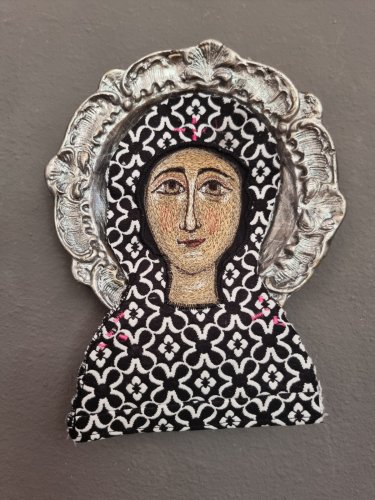
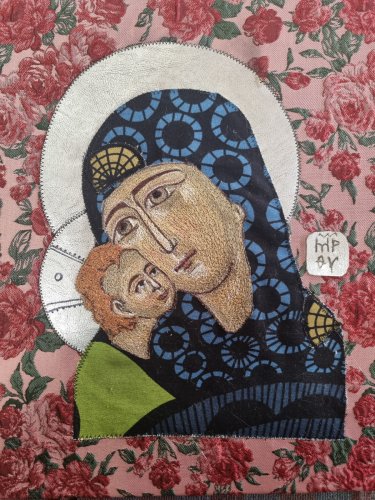
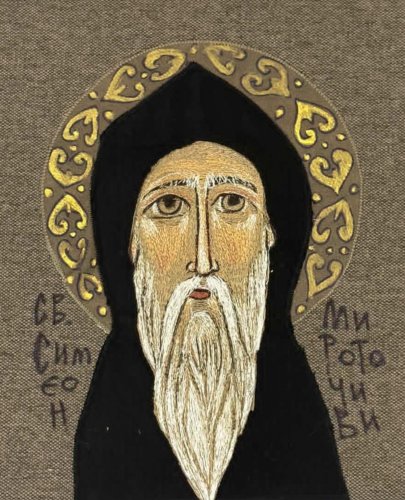
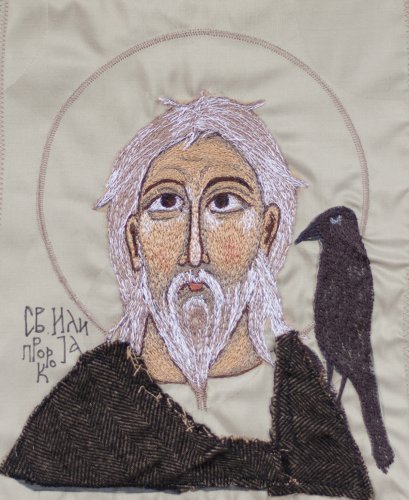
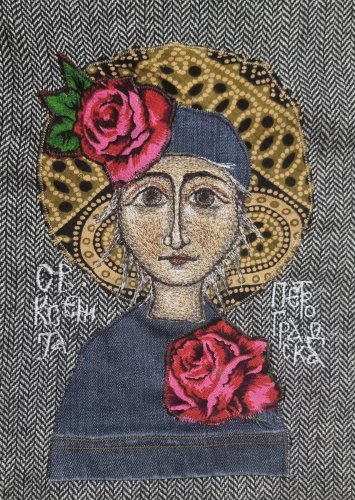
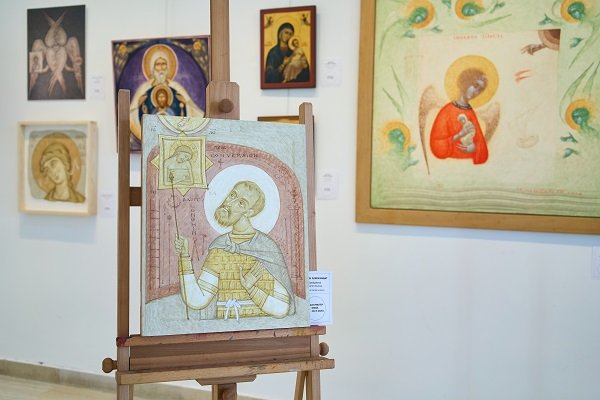
Educated at the Department of Textile Design at the Faculty of Applied Arts in Belgrade, Marija shaped her artistic path during a six-year stay at the Gradac Monastery as a novice. There, between obedience and a personal need to paint, her first embroidered icon was born. In her work, textile is not merely a material, it becomes a bearer of memory, touch, and warmth, a space where spiritual experience, manual labor, and contemporary artistic expression intertwine.
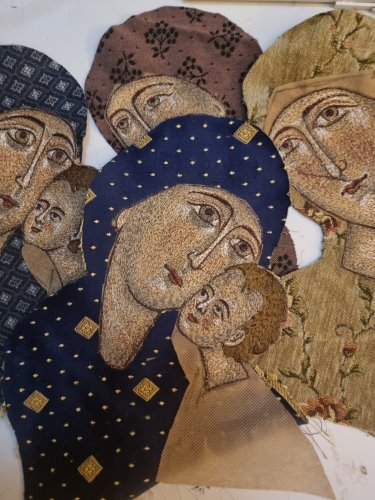
Her icons, created from “scraps” preserved in grandmothers’ chests and forgotten wardrobes, demonstrate that tradition is very much a living language of the present. In this sense, embroidery in her practice becomes an example of intangible cultural heritage that does not survive in a display case, but in the hands - through a slow, tactile process that, like prayer and spiritual contemplation, demands absolute presence.
You graduated from the Faculty of Applied Arts, Department of Textile Design. When and how did you decide to bring this craft into church art?
My decision to pursue church art is closely connected to my liturgical life. During my studies, I practiced icon painting and began embroidering shrouds and liturgical coverings.
Embroidery has long been used in church art, but primarily as decoration for liturgical objects. You have given it a leading role. Why? What is your relationship to embroidery?
After graduating, I went to the Gradac Monastery convinced that I would study icon painting. Since three sisters were already working as icon painters, Abbess Efimija assigned me to do “my thing with textiles”. At first, I was upset by that decision, but I was determined to obey. We founded workshops for weaving, embroidery, and knitting. I embroidered shrouds, vestments, and everything needed for the church. In my free time, I drew icons of female saints in pastel and pen. It was my way of doing both what I had been assigned and what I loved to paint.
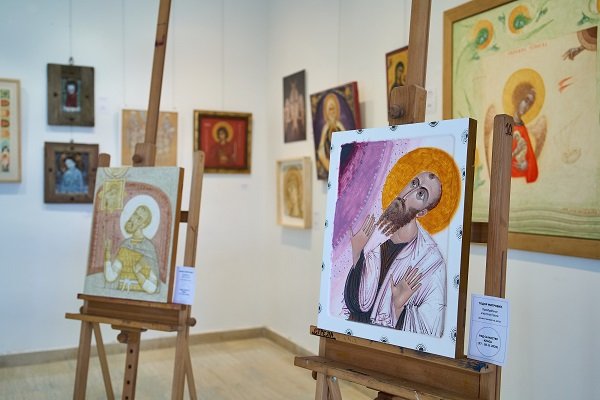
One long-awaited day, the abbess informed us that anyone who wished could create an icon of Saint Paul for an exhibition. On that occasion, I created my first embroidered icon, which was selected for exhibition at the “Progres” Gallery. Thus, my commitment to this artistic medium matured somewhere between frustration and monastic obedience.
Embroidery is inherently slow, repetitive, and physical. Do you see in that rhythm a spiritual dimension - perhaps a form of prayer or contemplation?
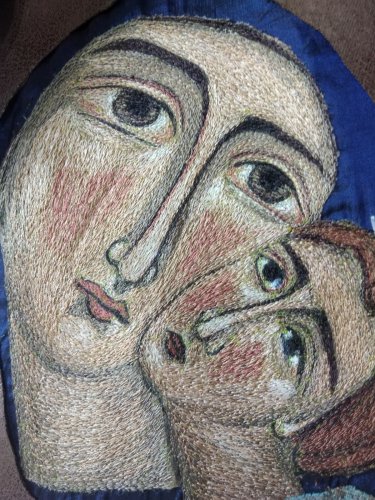
Textile introduces texture and tactility into art. Every phase of its making - from spinning and dyeing to weaving, felting, and embroidery - is tied to touch. The thread constantly passes through your fingers; you remain in direct physical contact with it. All of this requires attention, which is a precondition for prayer and spiritual insight. If you are not fully present, the thread slips and then comes unpicking and beginning again.
How did your monastic experience influence your artistic maturation and your understanding of what an icon represents?
Gradac Monastery influenced me profoundly in every sense. In that atmosphere, where I spiritually matured, my artistic sensibility was spontaneously shaped. There, I learned to nurture my personal expression and the creative freedom I had already gained at university. Daily services, shared work, reading the lives of the saints, contemplating icons, and the sisters who themselves were living icons - all helped me to feel that the icon is the presence of the saint.
Tell us about the materials you use. They are often fragments of used or discarded items, correct?
From the very beginning, I used so-called “scraps” that many of us keep for various reasons remnants of precious fabrics or materials we simply find too beautiful to throw away, even if we do not know what to do with them. When word spread that I recycle textiles for icon-making, materials began arriving from all over the world - from grandmothers’ chests, mysterious attics, and elegant wardrobes. My desire was to express myself creatively by combining diverse materials. In this way, treasures once kept for sentimental reasons began to receive new life, and their previous preservation found its true meaning.
You have exhibited abroad, from Rome to Bolivia. How did audiences respond?
Exhibitions abroad showed me that diverse audiences respond in much the same way, intuitively, even without familiarity with the Orthodox context. The tactility, the warmth of the textile, and the expression in the saints’ eyes allow viewers to connect immediately with the work.
Do you feel that an icon on textile changes the viewer’s relationship to the image, making it more intimate, closer to the body?
I believe that a textile icon can change one’s relationship to the icon as such. Human beings are the only creatures who are clothed from birth. The warmth of textile, inseparably fused with human skin for millennia, erases distance, even at the level of the image.
What does your dialogue with tradition look like? Where does it end, and where does your personal expression begin?
My relationship with tradition is certainly present in the learning and techniques I use. Yet I feel that presence on a more intuitive level - as a space that is constantly renewed. Tradition is a language, and my personal expression is the way I speak it.
How do you assess the current scene of contemporary sacred art in Serbia and the region?
It brings me joy to witness a time in which I see the courage of artists who believe in God and in their own gift. Every fertile period in art prepares the ground for the next step into a new creative expression.
In the context of contemporary discussions about safeguarding intangible cultural heritage, how do you see embroidery today, as a craft to be preserved or as a living language that continues to evolve?
In this context, I see embroidery primarily as a living language, not merely a craft to be conserved. In order to remain alive, it must be practiced; through practice, it develops and grows richer. Only in that process of refinement does its meaning and purpose fully emerge.
Do you sense that people are returning to handcraft as a way of slowing down and coping with stress?
I strongly feel that people today are turning again to handcraft, not only out of nostalgia, but out of a need to slow down and return to themselves. Manual work becomes a space of rest, silence, and inner balance, a quiet response to the accelerated pace of modern life.
If you would like, I can also refine it further into a slightly more essayistic, magazine-feature tone (a bit more lyrical and flowing), depending on the portal’s editorial style.
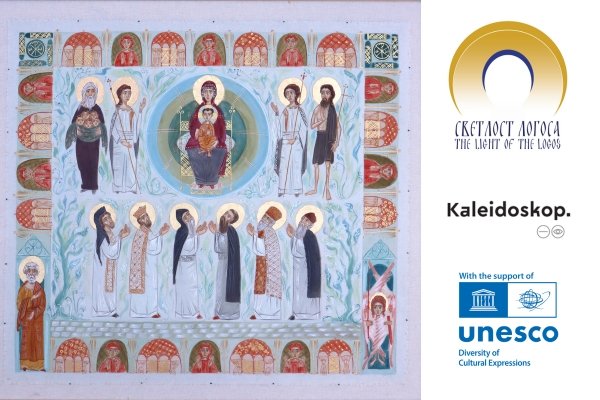
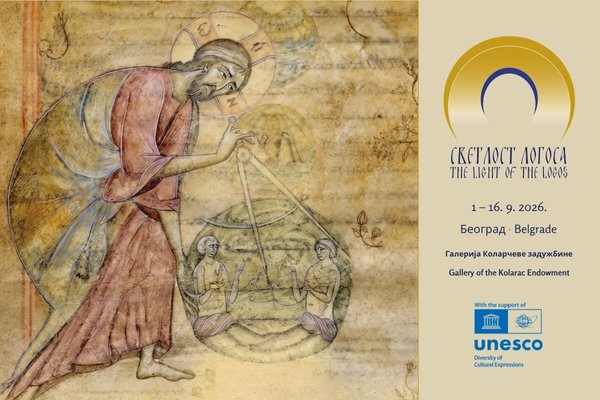
This report is part of the project Serbian Culture in the Focus of UNESCO, through which the Kaleidoskop Cultural Center marks the 850th anniversary of the birth of Saint Sava and, at UNESCO’s invitation, joins the global celebration of the 20th anniversary of the Convention on Cultural Diversity.
The project is co-funded by the Ministry of Information and Telecommunications. The views expressed in this supported media project do not necessarily reflect those of the institution that provided the funding.











Komentari