

Interview by: Milojko Božović / Cover photo: private archive
Composer and singer Bilja Krstić speaks for Kaleidoskop Media about her remarkable five decades in music, about life, her favorite traditional songs, her ensemble Bistrik, while also recalling Suncokret and Rani mraz, as well as her collaborations with Bora Đorđević and Đorđe Balašević…
“Honestly, I never had a grand plan — I only had a great desire for music. From today’s perspective, I would say that I received far more than I could have ever imagined as a teenager. Back then, I wasn’t certain where music would take me, but I knew I couldn’t live without it. If success is measured by the fact that I still feel passion for music, then I can truly say that I have fulfilled my dream. Music lasts as long as love lasts — and mine has lasted for 50 years.”
With these words, Bilja Krstić opens the conversation, summing up her extraordinarily long and successful presence on the Serbian music scene, which culminated in a major concert in November 2025 at the MTS Hall in Belgrade.
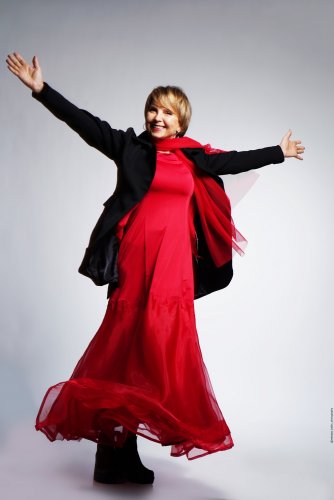
Photo credit: Nebojša Babić
Anyone who has ever attended a performance by Bilja Krstić and Bistrik — the author of this text had that privilege a few years ago at Mećavnik, during the legendary midnight concert slot at the Kustendorf Festival — knows the kind of energy and emotion involved. Traditional and folk melodies of Serbia and the Balkans, blended with elements of contemporary musical styles and enriched by her voice and the voices of her ensemble members, whom she affectionately calls “Bistričice,” create a truly unique experience.
However, Bilja Krstić is not only the ethno music artist she has been known as in recent decades. Her career is far richer and deeply interwoven with significant moments of local cultural history.
How would you characterize Suncokret, Rani mraz, and yourself within those groups today?
Suncokret and Rani mraz represent two extremely important chapters in my life — both shaped and encouraged me. These were bands full of energy, strong ideas, and powerful personalities. Being part of such teams was a privilege, surrounded by great talents and people who left a profound mark on my life. In those bands, I grew, remained curious and persistent, and stayed open to learning — something that later proved invaluable in my solo career. I carried with me precious experiences and lifelong friendships, which are truly priceless.
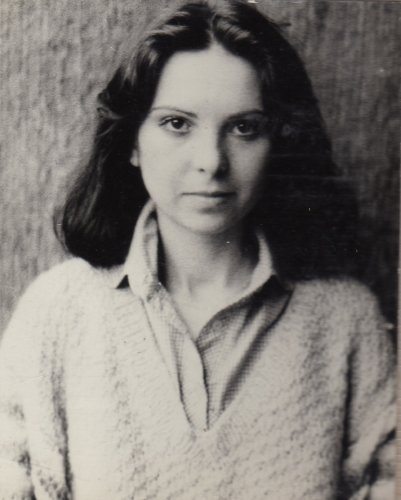
Bilja Krstić fondly remembers her musical beginnings, photo: Slobodan Purić
When did you first feel an affinity for ethno music? Suncokret included traditional songs with modern arrangements for its time — who influenced that direction the most?
In Suncokret, the fusion of tradition and acoustic sound emerged from the shared energy and sensibility of the entire group. We all felt the need to return to our roots while modernizing them through the acoustic expression that, in the 1970s, represented a contemporary musical perspective. Song arrangements at that time differed from today’s approach — traditional folk lyrics were often paired with newly composed melodies. This direction developed organically, out of respect for traditional heritage and a desire to express the spirit of the time in which we were creating.
You explored the musical traditions of Serbia and this part of Europe — which region is richest in terms of authentic folk music?
When it comes to the richest and most authentic sources of traditional music, the Vlach region holds a special place for me, as does the wider area of Romania. It was there that I conducted the most intensive research into musical roots, absorbing powerful yet subtle influences that naturally became woven into my own musical heritage. This region represents extraordinary musical richness — a living, pulsating landscape where archaic forms, ancient modes, and raw emotional expression intertwine.
There is a deep connection in this music with nature, ritual, and everyday life, as well as a strong melodic and rhythmic closeness to our own tradition. That is why the repertoire of Bistrik includes three beautiful songs from that region, which I sing with great joy and ease, even though it is not my native language. Through melody, rhythm, and emotion, this music feels deeply familiar — as if we speak different languages, but sing with the same voice.
Which song is your personal favorite?
If you mean a song from the Bistrik repertoire, it would be the well-known “Dimitrijo, sine Mitre”, a song from Vranje, made famous by Stana Avramović Karaminga.
And which one is the most demanding to perform?
“Od pole idat babo” — a song sung both in Macedonia and southern Serbia. The vocal arrangement for a three-part female choir was created by ethnomusicologist Dimitrije Obradović.
You also compose for film and television. The second season of the series Black Wedding is currently airing — which musical foundation did you use?
Miki Stanojević and I are the authors of the music for the first season of Black Wedding. I am very proud of how we managed to convey the intense atmosphere of tension and anticipation that defines the series. We moved beyond the initial idea of relying solely on Vlach folk elements due to the dark and tragic storyline and instead chose my voice as the main instrument, accompanied by a pulsating ostinato tone that serves as the leitmotif throughout the series.
Does traditional female singing have a future today?
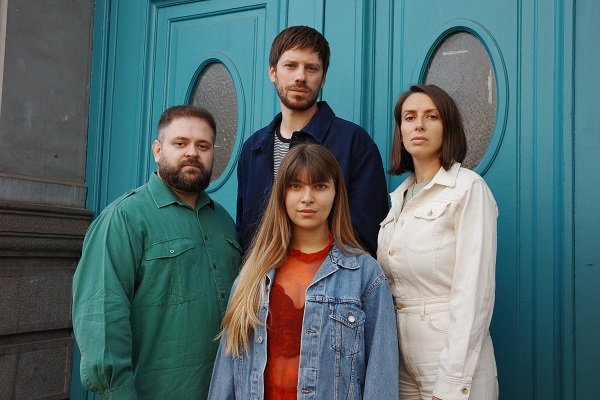
Your impression is absolutely correct. The concert by the female vocal group Crnućanka was a true revelation. Today’s younger generations seek authenticity, and their performance sounds sincere and powerful. This type of female singing carries a special strength, and under the guidance of outstanding ethnomusicologist Ivana Todorović, these young singers are creating a living continuation of tradition. Crnućanka brings us back to the source, but with new energy. While this may never become mainstream pop culture, it is undoubtedly a valuable and enduring musical heritage.

Photo credit: Nebojša Babić
You also lead the Bistrik Vocal Workshop. Could you tell us more about it?
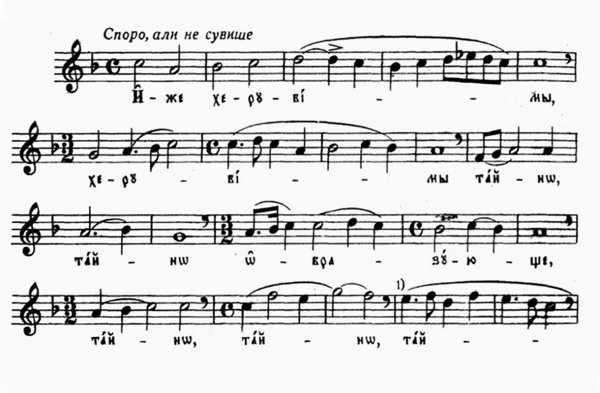
I realized long ago that traditional notation holds immense value, but it must be nurtured in a way that is accessible and appealing to young singers, while remaining connected to contemporary musical trends. That is how, in 2012, I founded the Vocal Workshop for young singers at the Kolarac National University, together with my Bistričice, Ruža Rudić and Nataša Mihaljinac.
Today, it is a large and successful vocal group performing at competitions, festivals, and ceremonies. Most participants, aged 9 to 29, are musically trained. They learn songs from sheet music, sing both in unison and polyphony, and each singer becomes a soloist at some point — a part of the process they particularly enjoy.
Do you see successors?
I am certain that these wonderful young women will one day become carriers of the traditional songs they learned in the workshop and pass them on to future generations with the same love. That means these songs will continue to live — and is there anything more beautiful or meaningful than that?
What are your plans for 2026?
The year has started well in terms of concerts and jubilees. We have just returned from Austria and France, where we performed in Vienna and Paris. After a short break until April, Bistrik will continue with concerts in Germany, followed by summer festivals in Montenegro, North Macedonia, and Greece. In the fall, we are preparing concerts in Novi Sad and my hometown Niš, and we will conclude the year with a major concert in Belgrade at MTS Hall, marking 25 years of Bistrik, with a special guest from Colombia — harpist Jahir Rivera.

Photo credit: Srđan Ralić
Looking back, how do you remember the anniversary year?
I will remember last year for the magnificent concert at MTS Hall and for celebrating 50 years on stage. It was a quiet celebration of music and life, filled with laughter and tears for times past.
Yet above all, I will remember 2025 for the young people who filled the streets — for their beauty, courage, and clarity about how they want to live in their country.
You closely collaborated with Bora Đorđević and Đorđe Balašević. What comes to mind when you think of them today?
I shared important moments with both of them at the beginning of my career, and each marked a distinct part of my musical and personal journey. I remember them today with deep gratitude — different, yet equally great authors who shaped our music and collective memory.
When you ask what comes to mind first: Bora represents strength and defiance; Đorđe, a gentle melancholic tone and a smile — along with great inner courage. Even today, I feel their energy quietly guiding me forward, each in their own way.
This report is part of the project Serbian Culture in the Focus of UNESCO, through which the Kaleidoskop Cultural Center marks the 850th anniversary of the birth of Saint Sava and, at UNESCO’s invitation, joins the global celebration of the 20th anniversary of the Convention on Cultural Diversity.
The project is co-funded by the Ministry of Information and Telecommunications. The views expressed in this supported media project do not necessarily reflect those of the institution that provided the funding.
READ ALSO:
PALACE OF SERBIA: PRIMER OF CONTEMPORARY ART
RETROSPECTIVE: THE LIGHT OF THE LOGOS 2025
All content on the Kaleidoskop media magazine portal is free of charge, and the website is financed exclusively through donations from readers and friends.
Support the work of our magazine HERE
















Komentari