
Author of the text: Milojko Božović / Photos: Gordana Tadić
I served at a vigil in the Belgrade Cathedral Church. Pavle, a bishop at the time, happened to be in the altar and asked me something very interesting:
"Father Miloš, what do you consider the greatest compliment anyone has ever given you regarding your voice?"
I knew there was some intention behind that question, so I told him honestly:
"Your Grace, something that was not meant as a compliment, but which I experienced as one, the words of a lady from Switzerland who said: You know, when you sing I find it hard to pray to God, but this is exactly how I imagine the Second Coming of Christ, a thunderous angel like you announcing it with a single mighty voice, there is nothing left to believe or disbelieve".
The Patriarch smiled and said:
"Yes, in this church you may sing the way you sing, but please always make an effort to adapt your voice to the space you are in".
I truly received that not as a reprimand, but as wonderful paternal advice.
...
This is a memory of Patriarch Pavle shared by retired priest Miloš Vesin, and it illustrates in many ways the significance and role of chanting in the liturgical life of the Serbian Orthodox Church.
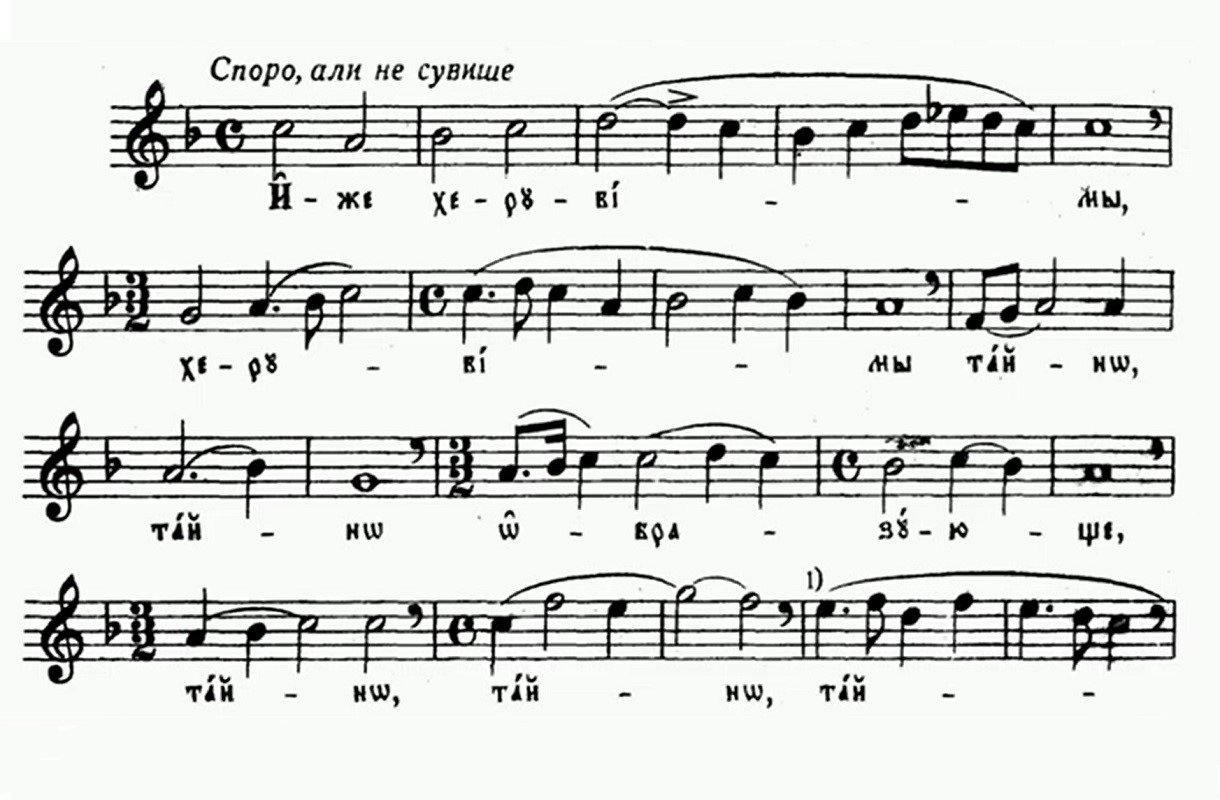
Chanters and chanting, that is, singing, must never take center stage, as the texts and literature on the subject emphasize: what matters is the glorification of God. According to Bishop Jovan Purić, church chanting has three elements: the Word, melody, and rhythm. He also identifies three types of poetry recognized in the Old Testament: songs, psalms, and hymns.
Faithful who are not versed in Orthodox dogmatics, or who are not sufficiently familiar with the essence of church chanting and the role of the chanting stand, the choir, the reader, and the priest, but who attend the Divine Liturgy every Sunday, may find themselves surprised by the different melodies they encounter. If in recent years you attended the Saturday evening vigil and midnight liturgy at the Monastery of the Entry of the Theotokos into the Temple in Senjak, and then went the following morning to the Cathedral of Saint Sava, the Church of the Protection, or some other Belgrade church, you might have had the impression of not attending quite the same services. Both experiences are majestic and deeply moving, but they are different.
What is the reason for this? The choir "Mojsije Petrović," led by Nikola Popmihajlov, which chants at the vigils in the Monastery of the Entry of the Most Holy Theotokos, cultivates what they describe as "an authentic, traditional Eastern Orthodox, Serbian and Byzantine style of church music". This chanting has been inscribed on UNESCO's list of intangible cultural heritage of humanity. It is characterized by the Octoechos, in which, as Popmihajlov explains, each mode is associated with a particular "disposition of the soul," that is, an emotional state: "One mode is combative, another is prayerful, a third is one of suffering".
Our celebrated chanter Dragoslav Pavle Aksentijević once described these eight modes as follows:
"The first is simple and serious, the second is penitential, prayerful, and tender. The third is lively and encouraging, while the fourth contains the qualities of all three preceding modes. The fifth most closely resembles a lament, a dirge. The sixth is the most passionate, the seventh is simple but demanding. Finally, the eighth is the crown of all the preceding ones".
Protopresbyter Vladimir Vrućinić writes about this in even greater detail:
"The first mode is characterized by dignity, sublimity, and seriousness in simplicity. The second mode is suited to expressing repentance, heartfelt prayer, hope, and love. The third mode is distinguished by expressiveness, courage, and confidence, as well as a combative quality. The fourth mode in some sense synthesizes the character of the first three and serves as an ideal transition toward the remaining modes. The character of the fifth mode is joyfully sorrowful, because in expressing grief over the suffering and crucifixion of Christ, it simultaneously expresses joy at His Resurrection. The sixth mode most often conveys suffering, pain, and anguish, the sense of sin and the fall of human nature, and provokes strong emotional responses in listeners. The character of the seventh mode is hesychastic and expresses a deep inner peace, with an expression close to the victorious and joyful. Most melodies of the eighth mode, especially those chanted at a slow tempo, carry a character of dignity, gravity, thanksgiving, and a serenity from which brightness radiates, expressing the conclusion of the Christian journey in peace and joyful communion with God".
Nikola Popmihajlov notes that the word "mode" may not be the best translation of the ancient Greek term "ichos," which in Serbian would be rendered as "echo" or "resonance".
"Orthodox theologians understand the experience of chanting as an echo of the heavenly song. In that sense, our eight ichoi are echoes of heaven," he says.
In Byzantine chanting there is also the ison, an accompanying melodic line that allows even the faithful in the church to participate in the singing, even if they do not know the melodies or texts of certain hymns. Popmihajlov cites the words of Saint Basil the Great: "The chanter chants, the people join in". The people join in by holding the ison.
This style of chanting can be heard at services in churches in Romania, Greece, Cyprus, and here in Serbia, in several churches and monasteries, including the vigils and midnight liturgies at the Monastery of the Entry in Belgrade.
In most churches of the Serbian Orthodox Church, the so-called Karlovci chant is in use, and throughout the year the Divine Liturgy of Saint John Chrysostom as composed by Stevan Stojanović Mokranjac is predominantly celebrated.
"The Karlovci chant is the way our people preserved and transmitted Byzantine chanting down to the present day. The main difference lies in the style of performance. Stevan Stojanović Mokranjac left the most extensive records on the subject in his writings," says Nikola Popmihajlov.
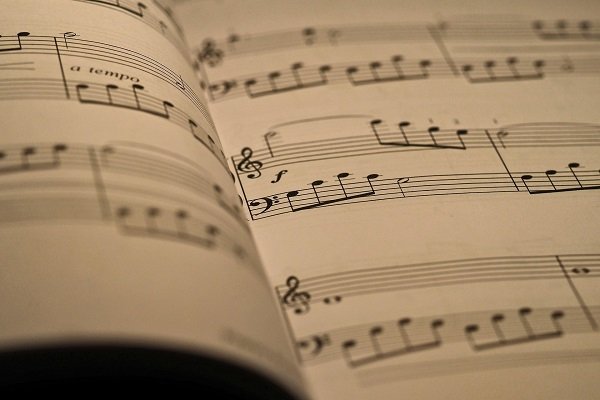
"It is well known from the preface to the 'Octoechos' that Mokranjac notated Serbian Orthodox church singing from old and finest singers during the period between 1890 and 1910," writes Kosta P. Manojlović in the preface to Mokranjac's "General Chanting," which he prepared in 1934. The great composer died in Skopje on September 14, 1914, at the beginning of the Great War. He was 59 years old.
Nikola Popmihajlov outlines the reasons why the Karlovci melody came to predominate.
"We are speaking of a time in the nineteenth century when the Serbian people were fighting for recognition of their independence from the Ottoman Empire. Serbs at that time did not want any influences coming from the East, and in their legitimate desire to keep pace with Europe, they embraced the European musical standards of the day. For this reason, none of those notators of our chant had been trained in the Byzantine musical tradition, which has its own theory, distinct from European music theory," Popmihajlov believes.
Alongside Mokranjac, a significant role in collecting and notating Serbian folk church songs in the nineteenth century was played by Kornelije Stanković, of Serbian origin from a family in Buda, who lived only thirty-four years. He collected and compiled "Orthodox Church Chanting among the Serbian People" in three volumes, along with numerous other church songs, and as he himself noted, had "for eight years continually striven to transcribe our folk church chanting into musical notation and to preserve it from every possible corruption and ruin".
The conclusion is that in the Orthodox Church, regardless of which melodic tradition is used, chanting must be to the glory of God and not to the glory of the chanter or singer, however exceptional his voice may be.
Let us return at the end once more to Patriarch Pavle and his advice to chanters, as presented by Professor Dr. Predrag Đoković in his lecture "Patriarch Pavle and Church Music".
"He asked that chanters guard themselves against every extreme, loud singing disturbed him, as did soft singing, which he could not understand. He did not like fast singing, believing it arose from pride, nor excessively slow singing, which he associated with sluggishness or spiritual laziness. One who sings in church must be a true Christian, who not only understands what he sings, but also possesses genuine piety, humility, spiritual sobriety, and discernment, and who is, moreover, aware of the high goal he is striving toward, for his own benefit and the spiritual benefit of his neighbors".
This report is part of the project Serbian Culture in the Focus of UNESCO, through which the Kaleidoskop Cultural Center marks the 850th anniversary of the birth of Saint Sava and, at UNESCO’s invitation, joins the global celebration of the 20th anniversary of the Convention on Cultural Diversity.
The project is co-funded by the Ministry of Information and Telecommunications. The views expressed in this supported media project do not necessarily reflect those of the institution that provided the funding.
READ ALSO:
PALACE OF SERBIA: PRIMER OF CONTEMPORARY ART
ICON: FROM CRAFT TO CONTEMPORARY ART
RETROSPECTIVE: THE LIGHT OF THE LOGOS 2025
All content on the Kaleidoskop media magazine portal is free of charge, and the website is financed exclusively through donations from readers and friends.
Support the work of our magazine HERE














Komentari