
By Miona Kovačević / Photos: Marko Rupena, Kaleidoskop media
As part of the project “Serbian Culture in the Focus of UNESCO,” implemented by Kaleidoscope Media on the occasion of the 850th anniversary of the birth of Saint Sava and the 20th anniversary of UNESCO’s Convention on the Protection and Promotion of the Diversity of Cultural Expressions, one of the key focal points is contemporary sacred art. This vibrant and dynamic visual scene offers a synthesis of tradition and contemporary artistic currents, in which centuries-old heritage is preserved not through reproduction, but through continuous creative re-examination.
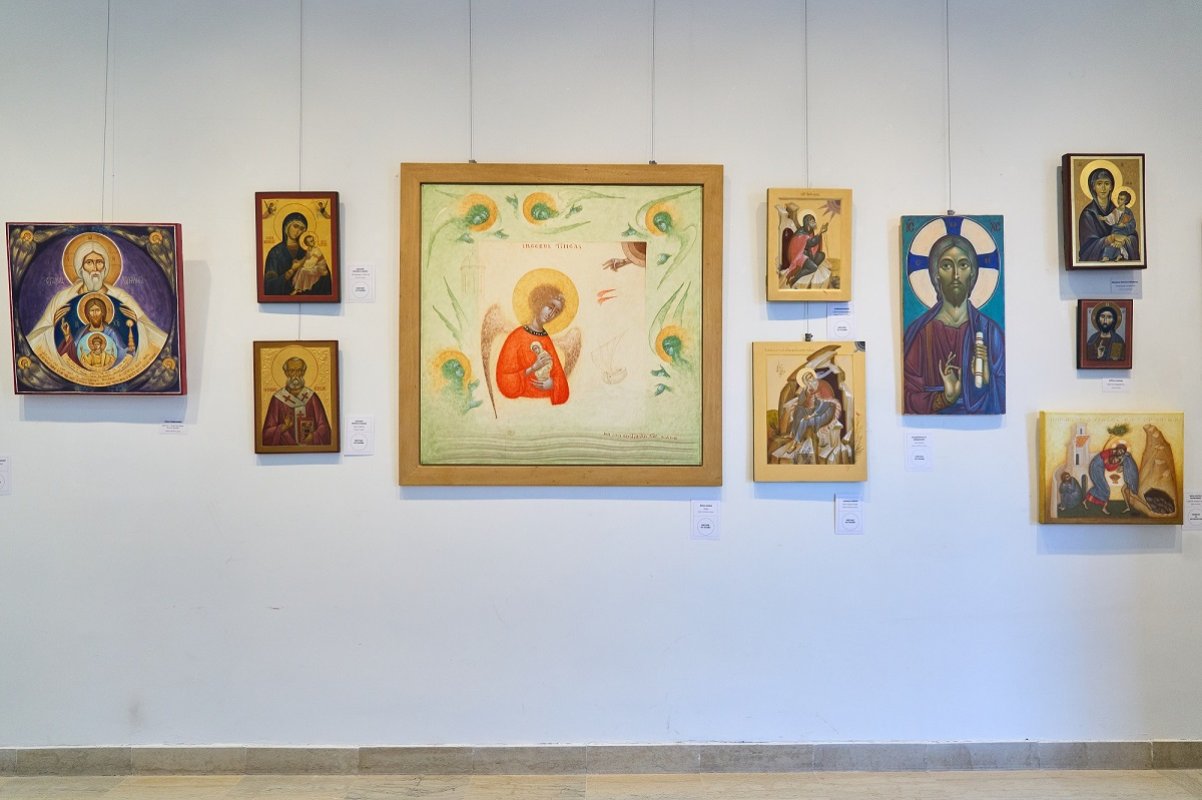
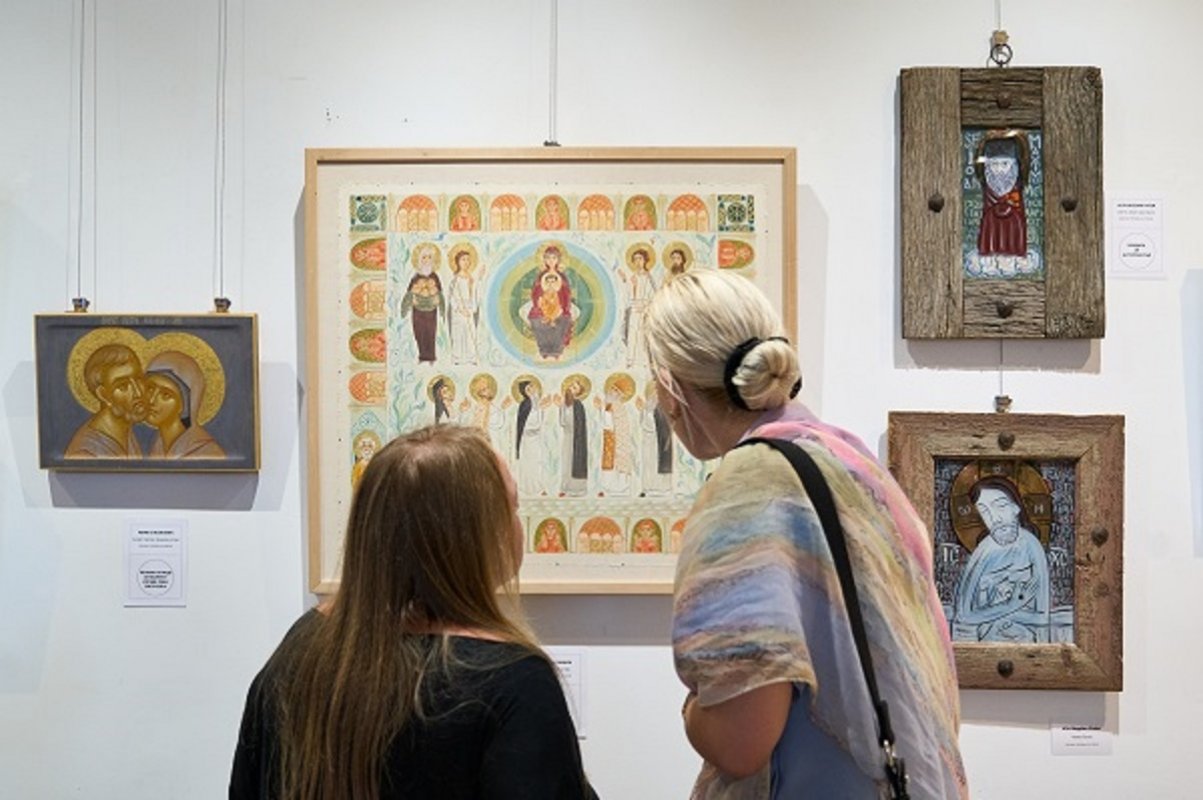
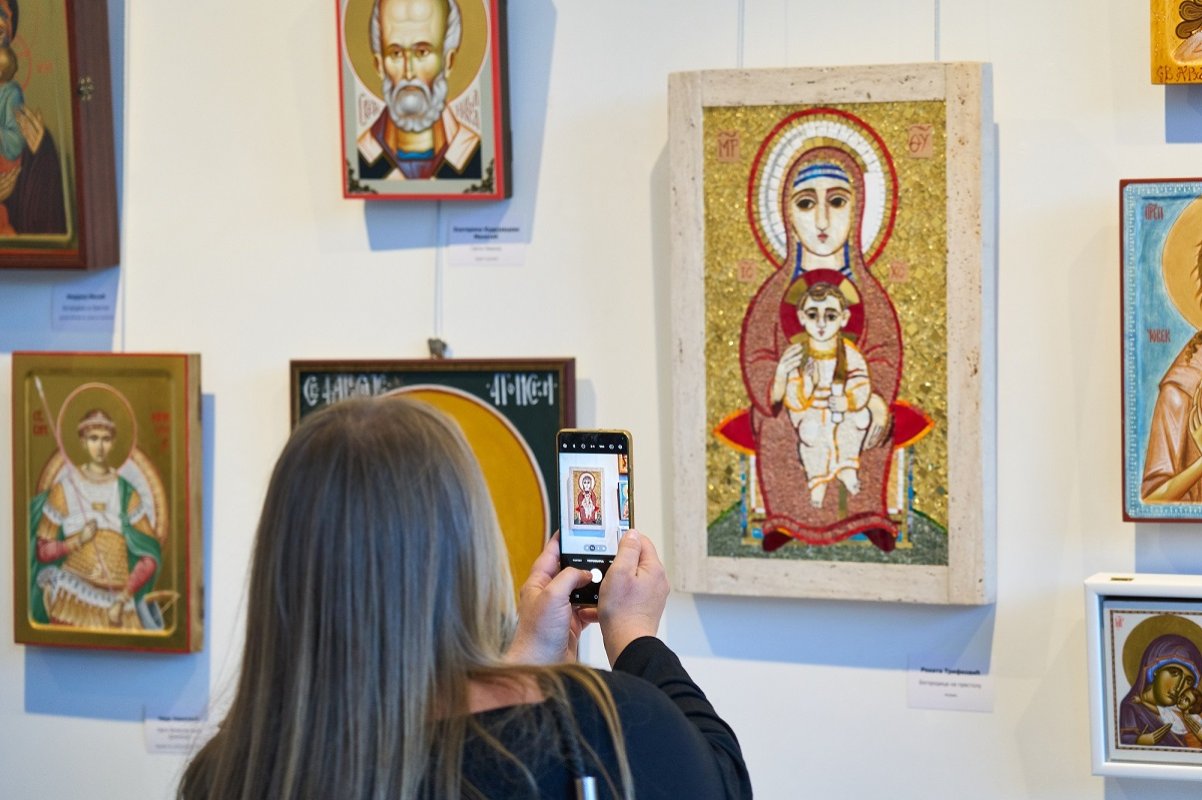
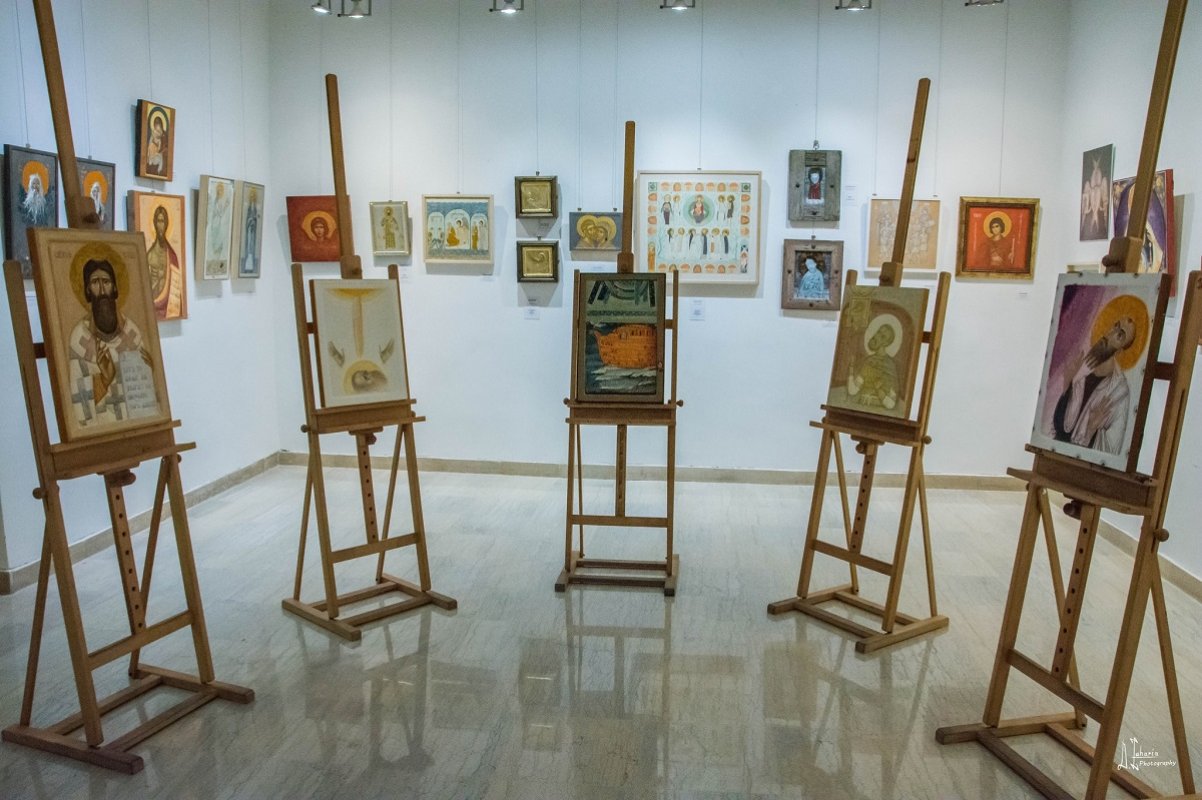
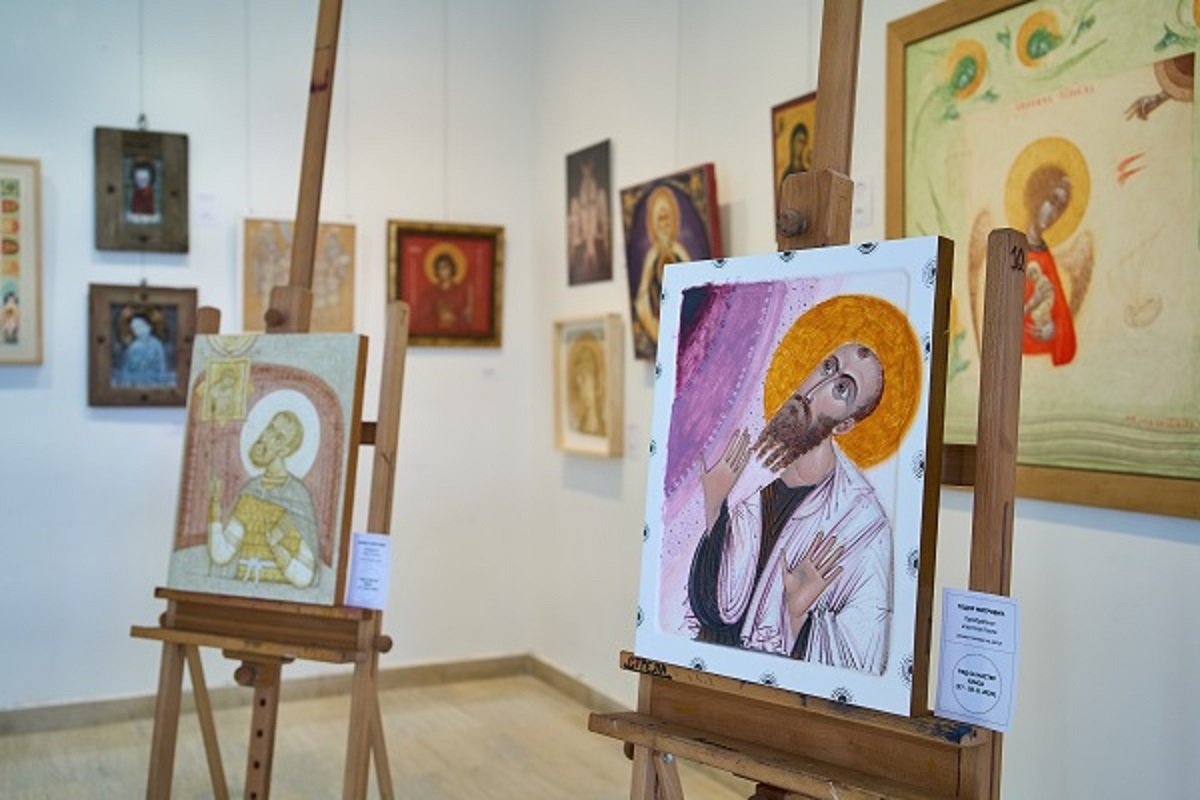
One of the most relevant platforms for observing this synthesis today is the exhibition of contemporary sacred art “The Light of the Logos”, held for the sixth time in August 2025 at the Kolarac Endowment Gallery in Belgrade. This edition marked the exhibition’s first presentation under its new title (formerly “Portrait on the Icon”), featuring an enhanced concept and an open call extended to icon painters from outside Serbia.
The exhibition was held with the blessing of His Holiness, Serbian Patriarch Mr. Porfirije, and under the patronage of UNESCO.
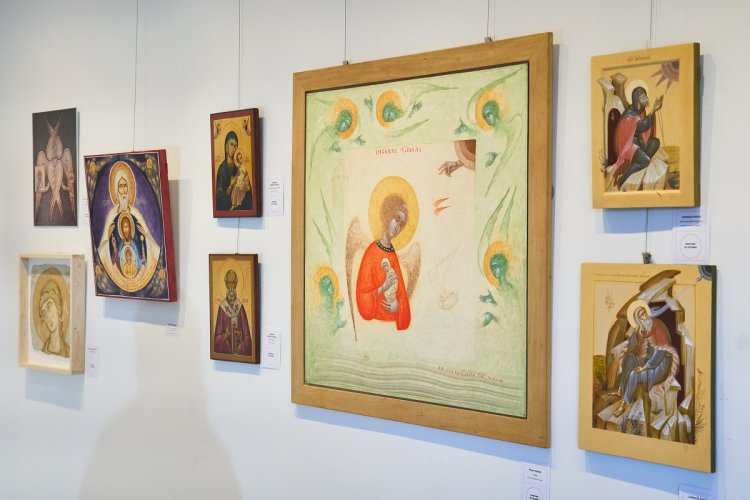
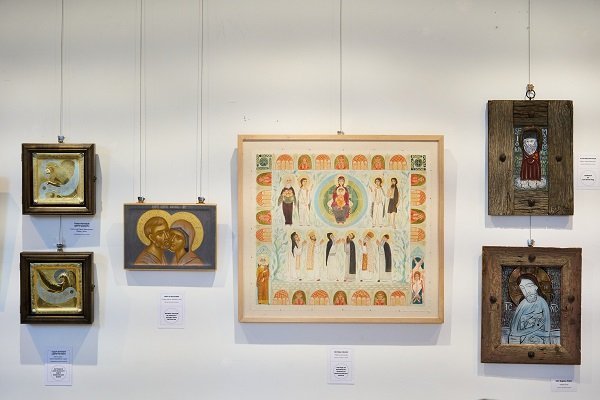
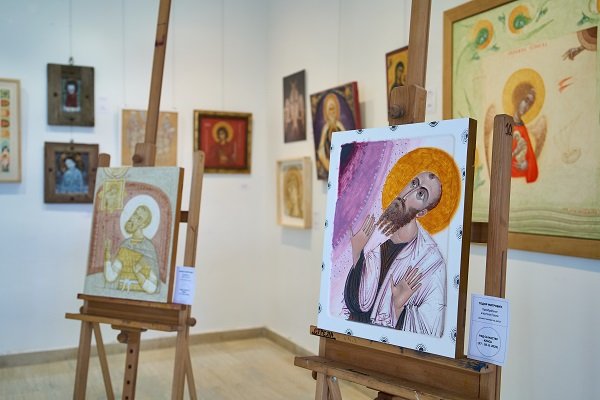
More than 200 submitted works by approximately one hundred artists from three continents, along with the exceptional attendance recorded at the Kolarac Endowment Gallery - over 600 guests at the opening and nearly 4,000 visitors overall testify to the strong interest of both professional circles and the wider public in this form of artistic expression.
As part of the accompanying program, a two-day masterclass brought together leading Romanian mural painters Grigore Popescu-Muscel, PhD Mihai Coman, and PhD Andrei Mușat, alongside representatives of the Serbian scene, PhD Todor Mitrović and MA Luka Novaković, who painted together in a shared creative process.
Professor PhD Todor Mitrović, also a member of the Artistic Council that jury-selected the submitted icons and recently appointed Dean of the Academy of Arts and Conservation of the Serbian Orthodox Church, where he teaches Icon Painting and Contemporary Mural Practices - speaks to Kaleidoscope Media about the historical background, current tendencies, and future directions of this artistic field.
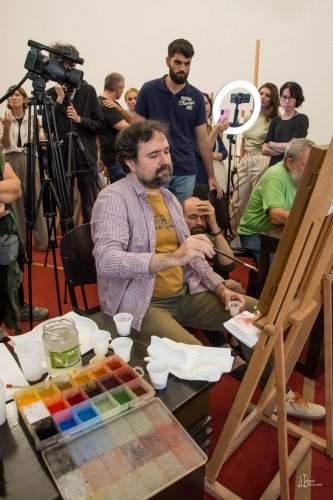
Professor PhD Todor Mitrović / Photo: Dumitru Zaharia
How would you assess this year’s selection for the exhibition “The Light of the Logos”?
- More than two hundred works were submitted to the open call, and 125 were selected for the final exhibition. A significant number of submissions came from abroad, although during the jury process we did not know which artists were from Serbia and which were international. In the end, among the 125 selected icons, there were authors from twelve countries across three continents, which came as a very positive surprise to all of us.
Can we conclude from this that the contemporary sacred art scene is particularly active?
- Absolutely. Icon painting is indeed developing as a dynamic scene, to use contemporary terminology. Significant progress has occurred precisely because an increasing number of artists are engaged in authentic artistic exploration within this field. There is a growing number of academically trained artists painting icons, coming both from traditional state academies of fine and applied arts, which have the longest tradition in Serbia, and from the Academy of Arts and Conservation of the Serbian Orthodox Church. More and more painters are also stepping outside ecclesiastical institutions and strictly church-related contexts, and through this process the art form has begun to truly come alive.
These artists have channeled their talents into the creation of a new artistic language, leading to renewed creativity. Educated artists cannot allow themselves the luxury of not thinking critically about what they do-of mechanically copying a medieval icon or fresco. That would be an unserious approach. True art does not emerge that way. Even in the Middle Ages, artists did not literally copy one another; rather, students adopted the visual language of their teachers, along with certain elements of their stylistic handwriting. Throughout the medieval period, we witness an extraordinary stylistic development marked by strong divergence.
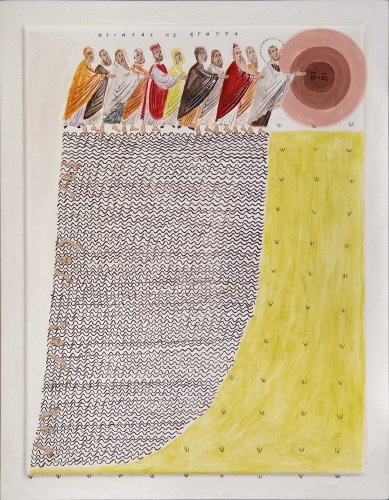
The Icon “The Exodus from Egypt”, by Professor Todor Mitrović
How did this development unfold in Serbia during the 20th and early 21st centuries?
- Initially, the practice largely relied on copying medieval models, as icon and fresco painting were being rediscovered and a return to medieval styles began. This process had already started earlier, between the two world wars, but it was rather tentative and slow within the artistic scene of that time.
After the Second World War, there was a prolonged period of stagnation, followed by an explosion of interest in the 1990s - first in national themes, then in the Church and faith, and consequently in ecclesiastical art. At the outset, this revival involved the imitation of medieval patterns or even contemporary Greek icon painters, largely due to the lack of accessible sources for learning. Gradually, however, step by step, the overall level was significantly elevated.
Today, we are witnessing an authentic artistic scene comparable to that of the Middle Ages, differing primarily in the speed of its development and the much greater stylistic dynamism and divergence - both products of a new era and a new media environment. In the Middle Ages, one could not easily encounter another artist’s frescoes without physically traveling great distances. Today, this can be done from home, via a screen, which has accelerated development and introduced a new stylistic dynamism that I consider a defining quality of our time. Such simultaneous stylistic divergence was not possible in the Middle Ages, when styles evolved diachronically, from generation to generation. Today, styles evolve and transform precisely because such immediacy is physically possible - this is the beauty and vitality of contemporary mural painting. The exhibition “The Light of the Logos” expressed this better than any other, showcasing the full breadth and richness of the development we are currently witnessing.
At the exhibition, audiences encountered not only diverse stylistic approaches but also a range of techniques and formats. Notably, one of the works took the form of a comic strip.
- When you observe historical frescoes, particularly in later Byzantine churches where a narrative approach to wall painting developed, you can find sections that are segmented much like a comic strip. Rectangular panels frame scenes conceived as self-contained dramatic units. In terms of media language - though not stylistically - this resembles what we now call comics. One could say that church wall painting is, in fact, a precursor to comics, and from that perspective, it is not surprising when contemporary artists move in that direction - it functions naturally and convincingly.
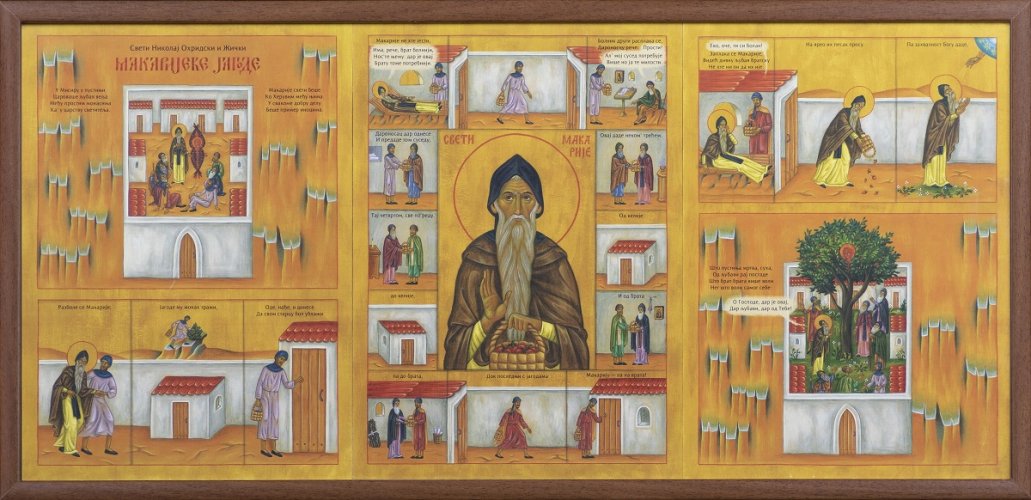
“Comic Strip” Icon “Macarius’ Strawberries” by Goran Rakić
In what other ways does “The Light of the Logos” hold significance for the domestic art scene?
- Its importance lies in the fact that it has been elevated to a much higher level in every respect, primarily due to the dedication of the Kaleidoscope Cultural Center and its outstanding organizational efforts, which become increasingly professional each year. The coordination initiated by Kaleidoscope and the collaboration among all participating artists has encouraged everyone to approach their work more seriously. Ultimately, UNESCO’s patronage gave the exhibition a truly international character in the fullest and most intensive sense of the term. Among the invited artists were leading figures of Romanian, Greek, and Serbian mural painting.
It would not be an exaggeration to say that this exhibition represents a global gathering of church art, and that during its duration Belgrade became a center of the mural painting world - a focal point of contemporary sacred art.
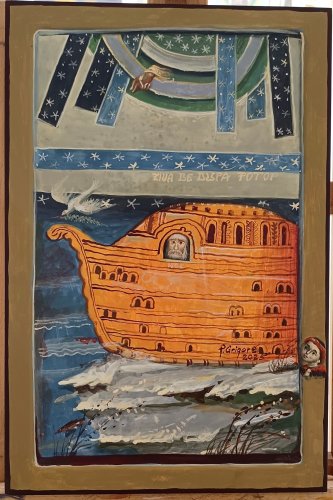
The Icon “The Day After the Flood”, by Grigore Popescu-Muscel
You mentioned the invited artists, among whom the most prominent is Grigore Popescu-Muscel, one of the greatest living mural painters today. Could you elaborate on his significance for sacred art?
- If you have any sensitivity to true art, his work is profoundly moving, both within ecclesiastical and academic circles. He has achieved a unique synthesis that brings together all the qualities, beauty, and depth of medieval art, while simultaneously integrating numerous elements of contemporary artistic expression into such a harmonious whole that they are inseparable. His work represents the furthest reach of contemporary mural painting. I often explain his significance like this: if his work were presented to a medieval Christian, it would be perceived as something entirely familiar and authentic. At the same time, a modern viewer with no prior exposure to icons could also recognize it as powerful, profound, and genuinely contemporary art.
Popescu is one of the pioneers and key figures in reviving the traditional technique of painting on wet plaster. In Romania, he holds the status of a national cultural treasure, and monographs are written about the churches he has painted. He is so devoted to his craft that he rarely appears in public, which made his presence at this event all the more meaningful. The fact that such a figure came to Serbia to paint and engage with us is both an honor and a compliment to the exhibition itself and, ultimately, to the Serbian art scene and contemporary mural painting. It was an event of extraordinary proportions.

Grigore Popescu at the Kolarac Endowment Gallery
How important was this gathering and joint painting process for artists and art students?
- This type of gathering was initiated by Giorgos Kordis, the most prominent Greek church painter of our time. He conceived a series of symposiums, not theoretical, but practical artistic symposiums, where artists would paint publicly, allowing audiences to witness the creative process firsthand and engage in dialogue with the artists. The first gathering took place in Thessaloniki around 2010, followed by one in Iași, and it gradually became a practice that has somewhat stagnated in recent years.
These encounters fostered personal connections, initially among artists from academic environments, professors from various art faculties, and later expanding beyond that circle. When the opportunity arose to organize an exhibition in Belgrade, we invited colleagues and friends, many of whom responded enthusiastically, partly because such gatherings had been absent for a long time. This marked the first occasion in Serbia where artists at this academic level convened in this way. Although Kordis was unable to attend due to health reasons, he was present in spirit and contributed his icons. The participation of such artists elevated the event to the highest possible level.
This feature is part of the project Serbian Culture in the Focus of UNESCO, through which the Kaleidoscope Cultural Center marks the 850th anniversary of the birth of Saint Sava and, at the invitation of UNESCO, joins the global celebration of the twentieth anniversary of the Convention on Cultural Diversity.
The project is co-financed by the Ministry of Information and Telecommunications of the Republic of Serbia. The views expressed in the supported media project do not necessarily reflect the views of the authority that provided the funding.
READ ALSO:
LIGHT OF THE LOGOS: A MEETING OF ARTISTS FROM AROUND THE WORLD















Komentari